

6 Mins Read
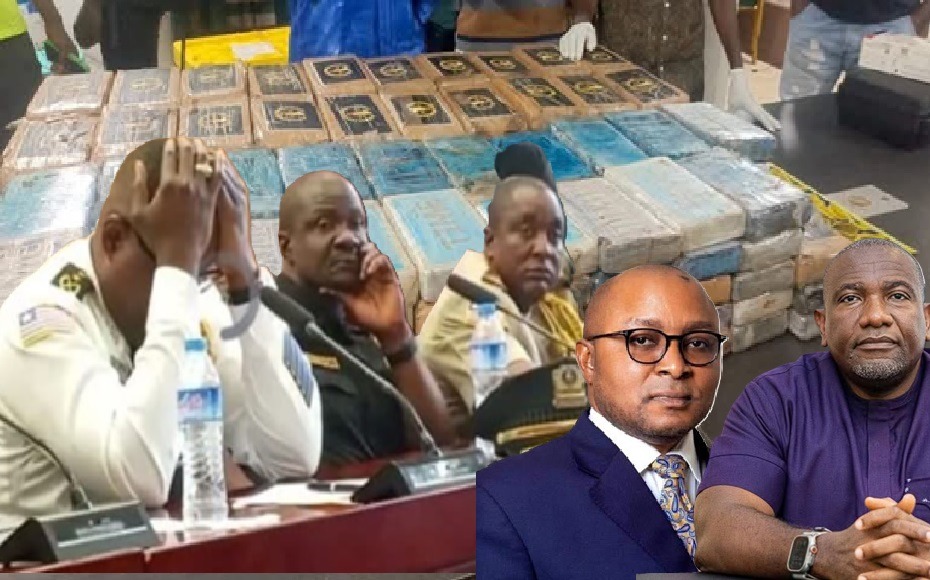
ADNews-Monrovia,Liberia: When news broke on June 8, 2026, that the Liberia Drug Enforcement Agency (LDEA) had intercepted over 237 kilograms of cocaine valued at an astronomical US$19.2 million at Roberts International Airport (RIA), the national response was a mix of shock and praise. It was touted as a historic win for law enforcement. But weeks later, as the Special Joint Investigative Team elevated the case into a high-level national security probe, a troubling pattern emerged.
The investigation is actively tracking international cartels, pursuing domestic mules, and summoning corporate entities. Yet, the public is left with a glaring, uncomfortable question: Why is the investigative spotlight being shone everywhere except on the structural and procedural rot at the airport itself?
A major transnational drug consignment doesn’t just slip into an international airport’s export stream by luck. It exploits a process. The focus of the current probe has heavily leaned toward narrative management and tracking individuals, but it has systematically failed to expose the gaping vulnerability of RIA’s internal security framework.
The Screened and Stamped Cargo: A Procedural Failure
The most damning aspect of the June 5–7 timeline is that this massive cargo didn’t bypass the system; rather, it went through it. The consignment was successfully screened, verified, and officially stamped for export via Brussels Airlines by the RIA Security detachment assigned at the Cargo Terminal. Reports indicate that a senior security manager at RIA has been directly implicated in this screening phase. This isn’t a case of a broken fence or a midnight breach; it is a case of systemic compromise. When the very system designed to protect our borders acts as a conveyor belt for international narcotics, the investigation must start with an autopsy of the airport’s administrative and operational standard operating procedures. Why has the Joint Investigative Team been so hesitant to publicly dissect how a package of this magnitude received a green light from internal aviation security? What is also very alarming is the shift in responsibility towards the cargo handler whilst shielding inept and clearly compromised security personnel. The other concern is the fact that the now-identified drug mule “Michael U.S Brown” was in contact with several of the security personnel on duty over the June 5-7 weekend, according to sources close to the investigation. The brazenness of the suspect who had absconded from Kakata Prison nearly two years earlier to hide in plain sight points to collusion and complicity beyond those low-level guards.
The Parallel Security Apparatus: Oversight or Blindspot?
The security architecture at the Roberts Air Cargo Center (RACC) is complex, supposedly built on overlapping layers of defense to prevent exactly this kind of crisis. This layout raises serious operational questions:
The Role of Joint Security: By design, national Joint Security forces are meant to maintain a permanent, vigilant presence at the airport. What exactly is their day-to-day mandate at the cargo hub? If they are stationed to inspect documentation and physical cargo leaving or entering the facility, how did six massive boxes of compressed cocaine plates move past their perimeter without a single red flag? The Joint Security forces at RIA is believed to include Police CID, NSA, DEA, Immigration, and Customs.
The SEGAL Connection: Adding another layer to this puzzle is the presence of the Security Expert Guard Agency of Liberia (SEGAL). Hired by cargo handler GLS Menzies, SEGAL has held the contract to ensure the safety of landside personnel and infrastructure at the cargo center since 2017.
The Conflict of Oversight: SEGAL is owned by Senator Momo Cyrus, who happens to serve as the Chairman of the National Security Committee in the Liberian Senate. This creates an uncomfortable paradox. The man whose private firm is paid to secure our primary cargo hub is the same lawmaker charged with legislative oversight of national security. Despite his men being on the ground, actively involved in securing the facility where this breach occurred, the Senator has remained remarkably silent. What has been SEGAL’s actual role in cargo custody, and why hasn’t its leadership been called to account for what happened on their watch?, what are the responsibility of SEGAL guards on transport vehicles leaving and entering the Roberts Air Cargo Center?
The LAA and Ministry of Transport: A Loud Silence
Perhaps the most frustrating element for the public and the Liberian Senate, which recently challenged the Joint Security over the slow pace of the probe, is the absolute lack of an official internal report from the airport’s management.
The Liberian Airport Authority (LAA) and the Ministry of Transport have retreated into a shell of defensive silence. It is vital for the management of RIA and the LAA to publish a transparent, comprehensive report detailing what transpired over that weekend between June 5th and June 7th. The public needs to know: Were they fully aware of the vulnerabilities? What internal actions did they take to discover or assist in the interdiction?
By choosing silence over transparency, the regulatory authorities are inadvertently fueling public speculation that institutional shielding is taking precedence over the raw truth.
President Boakai has stated that “no institution will be shielded from scrutiny.” If that promise is to hold weight, the Special Joint Investigative Team must pivot. Tracking down the couriers and cartels is necessary, but useless if the gateway remains compromised. It is time to look at the failed processes, the compromised screening stamps, the conflicting private-public security roles, and the administrative silence that allowed a nineteen-million-dollar vulnerability to walk right through the front door of Liberia’s only international airport.
Comments are closed.