

5 Mins Read
ADNews-Monrovia, Liberia: Liberian human rights defender and governance practitioner Jonathan M. D. Yanzee has returned to Liberia after representing the country at the 25th University on Youth and Development (UYD) in Mollina, Spain.
The week-long Human Rights Education Training of Tutors (HEY ToT), held from September 14–19, 2026, brought together more than 100 young people from over 40 countries for discussions on artificial intelligence, peace, human rights, digital security and responsible technology governance.
The programme brought together young professionals, youth workers, experts, policymakers and institutional representatives from Africa, Europe and the Middle East under the theme, “AI, Youth and Peace: Preventing Cybercrime and Digital Harm through Responsible AI Governance.”
But Yanzee’s role at the programme went beyond that of a participant.
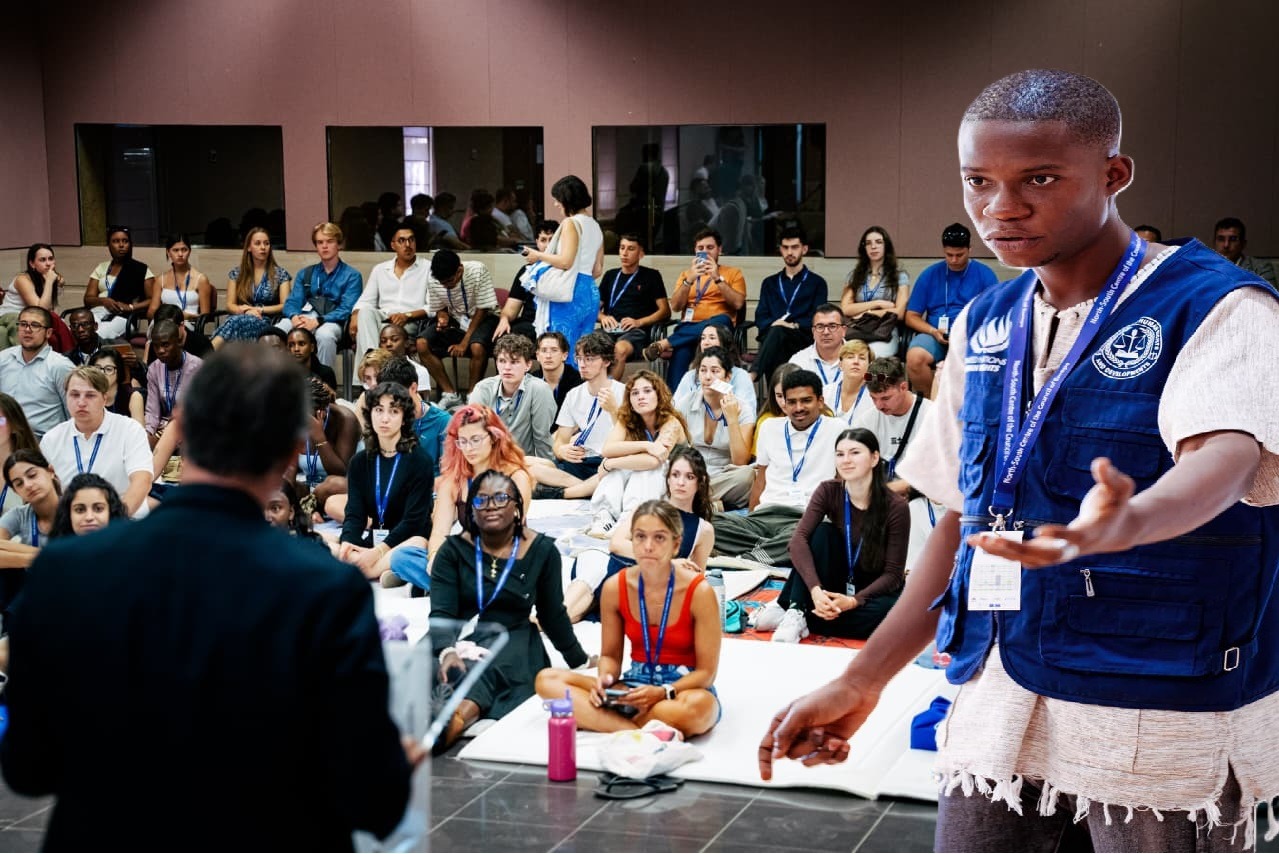
He served as a facilitator, leading a peer-to-peer workshop on Digital Rights and Digital Security, where he shared Liberia’s youth and human rights experiences with participants from Europe, Africa and the Middle East.
During the workshop, Yanzee presented regional legal instruments from the participating regions and provided comparative perspectives on digital rights, security and best practices.
FROM PARTICIPANT TO FACILITATOR
Yanzee’s workshop focused on practical ways young people can protect their rights and personal safety as civic participation, communication, activism and other aspects of public life increasingly move online.
Participants discussed freedom of expression, privacy, access to information, equality and civic participation, while also examining ways to identify online threats, secure digital accounts and devices, protect sensitive information, use safer communication platforms and strengthen digital resilience during internet disruptions and shutdowns.
The session formed part of eight peer-led workshops created and delivered by participants themselves.
The peer-led approach was designed to move young people beyond being recipients of information and encourage them to become facilitators, critical thinkers and co-creators of solutions.
According to Yanzee, the experience also comes with a responsibility that extends beyond the training programme.
“Beyond enhancing our knowledge, we built quality relationships, intercultural understanding and a stronger sense of responsibility as multipliers of human rights education,” he said.
Yanzee said participants are expected to take the knowledge gained from the programme back to their respective communities and share it with other young people.
BRINGING THE CONVERSATION HOME TO LIBERIA
Yanzee’s participation comes at a time when digital technology is playing an increasingly important role in civic engagement, access to information, political participation and human rights advocacy across Africa.
For Liberia, he believes digital rights education should form part of the broader conversation surrounding youth participation, democracy, peacebuilding and human rights.
His workshop therefore went beyond discussions about technology in abstract terms, focusing instead on practical skills that young people and civil society actors can use to protect themselves while participating in digital spaces.
The UYD 2026 discussions also examined the opportunities and risks associated with artificial intelligence, including digital manipulation, cybercrime, misinformation and the implications of increasingly powerful technologies for peace and democracy.
At the opening of the programme, Ambassador Andreu Jordi, President of the Executive Committee of the North-South Centre of the Council of Europe, highlighted the importance of AI literacy in helping young people identify manipulation, respond to digital risks and advocate for responsible, rights-based governance.
A central message throughout the programme was that technological advancement should remain connected to human rights, peace and democratic values.
A LIBERIAN VOICE IN A GLOBAL CONVERSATION
The programme gave Yanzee an opportunity to exchange experiences with young people and professionals from different regions who are working on similar challenges.
It also strengthened his role as a human rights educator and multiplier, with participants expected to transfer the knowledge and methodologies acquired internationally to their local communities.
Yanzee serves as Executive Director of the Campaign for Human Rights and Developments (CHRD), a Liberian youth-led human rights organisation working in areas including human rights education, youth civic participation, democracy and governance, peacebuilding, justice and the rule of law, digital rights, child protection, and the protection of human rights defenders.
His participation in the international programme adds to his broader work in Liberia promoting human rights education and youth participation.
FROM SPAIN TO LIBERIA
Upon his return to Liberia, Yanzee said the most important outcome of the programme was not simply the international exposure but the responsibility that comes with the knowledge and relationships gained.
For him, the training represents a bridge between international knowledge and local action — taking lessons from an international platform and translating them into practical human rights education for young people in Liberia.
“As a Human Rights Defender with the Campaign for Human Rights and Development, I remain committed to human rights education and the promotion and protection of human rights,” Yanzee said.
The University on Youth and Development is organised under iLEGEND III – Intercultural Learning Exchange through Global Education, Networking and Dialogue, a joint project co-funded by the European Union and the Council of Europe.
The initiative is implemented by the North-South Centre of the Council of Europe, with support from the Spanish Institute of Youth (INJUVE) and the Euro-Latin American Youth Centre (CEULAJ).
For Liberia, Yanzee’s return from Spain represents more than the conclusion of an international training programme. It provides another opportunity to strengthen local youth capacity around a rapidly evolving area of human rights — protecting people, their freedoms and their personal security in an increasingly digital world.
Comments are closed.