
Free Tuition, Growing Pressure: University of Liberia Struggles with Funding and Poor Facilities

8 Mins Read
ADNews-Monrovia, Liberia: When Liberia introduced its tuition-free policy for public universities in 2018, many families saw it as an opportunity for more young people to access higher education without the burden of tuition fees.
But seven years later, the University of Liberia (UL) is facing serious challenges, including a faculty shutdown, overcrowded classrooms, poor sanitation and concerns over whether government funding is enough to sustain the institution.
On July 20, 2026, the University of Liberia Faculty and Staff Association (ULFASA) declared a total shutdown, ordering faculty and staff to stay away from all university campuses indefinitely until their demands concerning a Collective Bargaining Agreement and other welfare issues are addressed.
The shutdown has disrupted academic activities and left thousands of students uncertain about when normal classes will resume.
University President Dr. Layli Maparyan has described the concerns raised by faculty and staff as legitimate, acknowledging that the institution is dealing with long-standing challenges.
“Dialogue is the only way forward rather than confrontation,” she said. “These are long-standing challenges I inherited.”
At the center of the debate is the university’s financial situation. While the tuition-free policy has opened the doors of higher education to more students, questions remain about whether government funding has kept pace with the growing demand for university services.
Growing enrollment, mounting financial pressure
Before the tuition-free policy was introduced, the University of Liberia enrolled between 14,000 and 17,000 students per semester, according to data from its Office of Enrollment Services.
Following the October 2018 announcement, enrollment increased. By 2022, the university had more than 21,000 students, and the figure rose above 22,000 in 2023. The university now says it serves approximately 30,000 students, despite having an intended campus capacity of about 15,000.
The increase in enrollment has placed additional pressure on classrooms, facilities and other university services.
Government funding has also become a major concern. Before the tuition-free policy, the university received US$16 million in the 2016/2017 fiscal year, according to the Ministry of Finance and Development Planning.
For fiscal year 2024, government approved US$33.7 million for the university. However, the Consolidated Financial Statement shows that only US$31.1 million was disbursed, leaving a difference of approximately US$2.6 million.
The General Auditing Commission reportedly flagged the withholding as a violation of the Public Financial Management Law.
The funding figures have also raised questions about the university’s ability to meet its operational and infrastructure needs.
During a 2025 appearance before the Liberian Senate, President Maparyan said she had requested US$41 million but received US$33 million.
“90% of that is tied up in salaries,” she testified. “That leaves very little for critical infrastructure, research, and academic programs.”
However, Finance Minister Augustine Kpehe Ngafuan countered the assertion during the same hearing. He said the university received almost 100 percent of its 2024 budget, approximately US$33.7 million, and questioned requests for additional funds outside the approved budget.
The university’s Comptroller, Togar Gibson, also disclosed that the US$1 million allocated for renovations in the 2024 budget was not received for that purpose. He said the money was redirected to pay adjunct professors on the directive of President Joseph Boakai.
The competing explanations highlight the need for greater clarity about the university’s budget allocations, actual disbursements and spending priorities.
At the October 2026 budget hearing, the University of Liberia presented a proposed 2027 budget of US$61,614,970. The amount is intended to address additional classrooms, renovations, furniture and long-standing salary and welfare concerns.
Since undergraduate students have not paid tuition fees since 2018, the university now depends heavily on government funding. Graduate and professional programmes, however, continue to charge fees.
Was the policy properly planned?
Questions have also been raised about whether education stakeholders were adequately consulted before the tuition-free policy was introduced.
Dr. Cecelia Cassell, Executive Director of the National Commission on Higher Education, said the policy created gaps in the operations of the University of Liberia and other affected institutions.
According to Dr. Cassell, the policy was introduced without sufficient consultation with education stakeholders.
She explained that student fees previously helped the university cover some internal expenses. With the removal of undergraduate tuition payments, the institution has become more dependent on government funding.
While acknowledging the importance of making higher education accessible, she said government must consider a new approach to providing adequate financial support to the university.
The University of Liberia International Alumni Association (ULIBAAA) also raised concerns in 2025, calling on the government to develop “a sustainable, long-term funding strategy that ensures consistent budgetary support to the university, particularly to offset the effects of the tuition-free policy.”
These concerns have strengthened calls for a funding arrangement that allows the university to maintain its facilities, support academic programmes and meet its obligations to faculty and staff.
Students bear the consequences
Beyond the budget figures and policy debate, students say the university’s challenges are already affecting their daily lives.
UL President Maparyan has said the institution needs US$3.9 million for renovations and another US$300,000 for urgent bathroom repairs.
Without the required funding, she warned, “classrooms will remain overcrowded, sanitary conditions will deteriorate further, and our faculty will continue to work under unacceptable conditions.”
For some students, the poor sanitary conditions have become a serious concern.
A student in the Department of Communications and Media Studies, who requested anonymity, said the condition of the bathrooms has forced some students to find alternative places to ease themselves.
“I do not use the student bathrooms anymore because they appear unsafe for my health,” the student said. “Most of the bathrooms are dirty due to lack of continued maintenance. I usually ease myself in the bush across the field near the school or behind the school building.”
Another student described the conditions as sickening, while a third said government failed to put mechanisms in place to address the funding gap when the tuition-free policy was announced. Despite the challenges, students are not calling for the policy to be reversed.
At a recent press conference on Capitol Hill, the campus-based Students Unification Party maintained that “the free tuition policy is permanent, and nothing will change it.”
For many students, the policy remains an important opportunity, particularly for families who cannot afford the cost of private universities. However, every strike extends graduation and every closure delays jobs.
Can the university find a way forward?
The ongoing faculty shutdown has added urgency to calls for a solution. ULFASA has instructed faculty and staff to stay away from university activities until further notice.
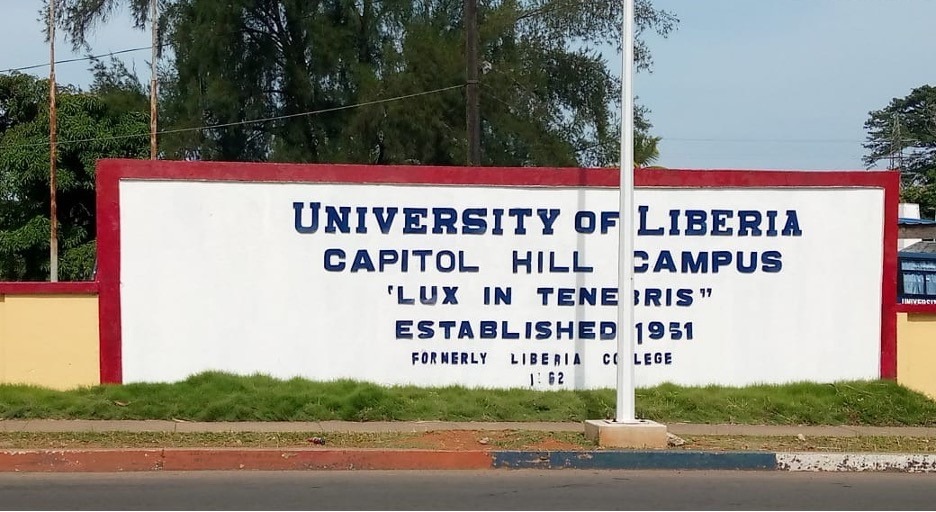
Meanwhile, President Maparyan announced at a press conference at the university’s Capitol Hill campus that the 2026 graduation ceremony would be postponed to March 2027.
Efforts to obtain a full breakdown of the university’s budget allocations and disbursements from 2018 to 2026 were unsuccessful. The reporting team also contacted UL President Maparyan to request financial records and clarification on the differences between approved budgets and actual disbursements. She declined to comment on this investigation.
The figures and concerns presented by university officials, government representatives, education authorities and students point to a difficult question: how can Liberia sustain tuition-free higher education while ensuring that public universities have the resources to function effectively?
The policy has expanded access to university education, but access alone cannot guarantee quality education. The University of Liberia must also have adequate classrooms, functional facilities, properly supported faculty and sufficient resources to deliver the education students expect.
For now, students and faculty remain caught in the uncertainty. Whether the government and university administration can agree on a sustainable funding arrangement may determine how effectively the institution serves the thousands of young people who depend on it.
This story was produced by students Zechariah Jigbeh, Angel Williams, Diamond Sowards, Kona Kromah and Devine Travel of the Department of Communications and Media Studies of the University of Liberia with support from the Center for Media Studies and Peacebuilding (CEMESP).
Comments are closed.