


3 Mins Read
ADNews-Monrovia, Liberia: ActionAid Liberia and its partners have submitted a joint communiqué to the Government of Liberia, urging urgent, people-centered action to confront the country’s escalating climate crisis and advance climate justice, equity and sustainable development.
The communiqué was presented at the close of the 2025 National People’s Summit on Climate Justice, held Dec. 15–16 at the Ellen Johnson Sirleaf Ministerial Complex in Monrovia. The summit brought together state and non-state actors, women’s groups, youth organizations, farmers’ associations and regional bodies.
In the document, the groups recalled commitments made at the 2024 National Stakeholders’ Summit on Climate Justice and acknowledged progress since then, including increased government engagement on agroecology, climate finance, domestic resource mobilization and more inclusive Nationally Determined Contribution (NDC) processes. They stressed, however, that Liberia’s climate challenges demand faster and more inclusive implementation.
Although Liberia contributes minimally to global greenhouse gas emissions, the communiqué noted that the country faces disproportionate climate impacts, including recurrent flooding, coastal erosion, food insecurity, land degradation and climate-induced displacement. Climate action, the groups said, must be grounded in justice, inclusion and accountability.
Citing Liberia’s commitments under NDC 3.0, regional ECOWAS processes and continental frameworks such as the Comprehensive Africa Agriculture Development Programme (CAADP), the communiqué called for translating global and national pledges into tangible benefits for communities, particularly women, youth, smallholder farmers and other marginalized groups.
Agriculture, Finance and Energy Gaps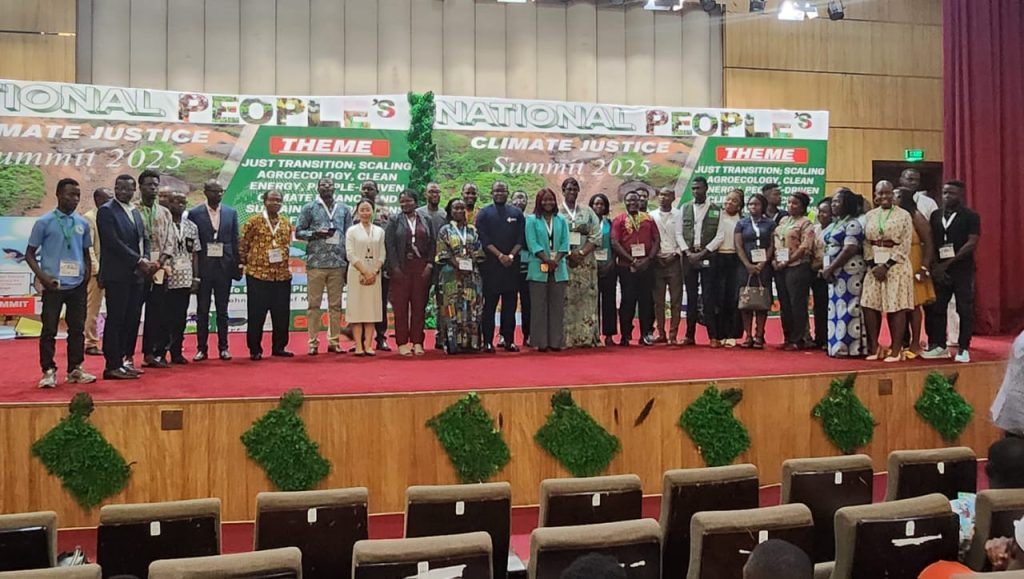
The groups highlighted agriculture’s central role in the economy, accounting for about 36% of gross domestic product and employing more than 60% of the population, while remaining highly vulnerable to erratic rainfall, flooding and rising temperatures. Despite evidence that agroecology can significantly boost yields and resilience in smallholder systems, it remains underfunded and underprioritized, the communiqué said, as industrial agriculture and extractive-led development continue to drive land dispossession and environmental degradation.
They also criticized gaps in the CAADP Biennial Review Process, saying it lacks adequate gender- and youth-responsive indicators and noting that Liberia has not consistently met the African Union target of allocating at least 10% of the national budget to agriculture.
On climate finance, the communiqué pointed to persistent inequities, noting that Africa receives less than 5% of global climate finance and that only a fraction reaches community-based and women- or youth-led initiatives. In Liberia, most climate funding is channeled through centralized or international mechanisms, limiting access for local actors.
The document further underscored Liberia’s energy challenges, with national electricity access below 30% and significantly lower rates in rural areas, despite vast renewable energy potential. Youth unemployment remains high, while green jobs and decentralized renewable energy models remain inadequately supported.
Calls for Action
The communiqué outlined a six-point call to action, including scaling up agroecology, strengthening accountability and inclusion under CAADP, expanding people-driven climate finance, accelerating a just energy transition and green jobs, improving climate-induced disaster preparedness, and domesticating outcomes of the latest U.N. climate talks.
The groups committed to sustained multi-stakeholder dialogue, tracking and publicly reporting progress, and using the communiqué as an advocacy tool at national, regional and international levels.
The communiqué was read, validated and adopted by summit participants on Dec. 16. It was signed on behalf of a broad coalition, including ActionAid Liberia, the National Civil Society Council of Liberia, the CAADP Non-State Actors Platform, youth and women’s organizations, farmers’ groups and regional institutions.
Comments are closed.