

3 Mins Read
ADNew- Monrovia, Liberia: ActionAid Liberia and its partners called on local and international stakeholders to commit to people-centered actions to advance climate justice, a just transition and sustainable development in Liberia.
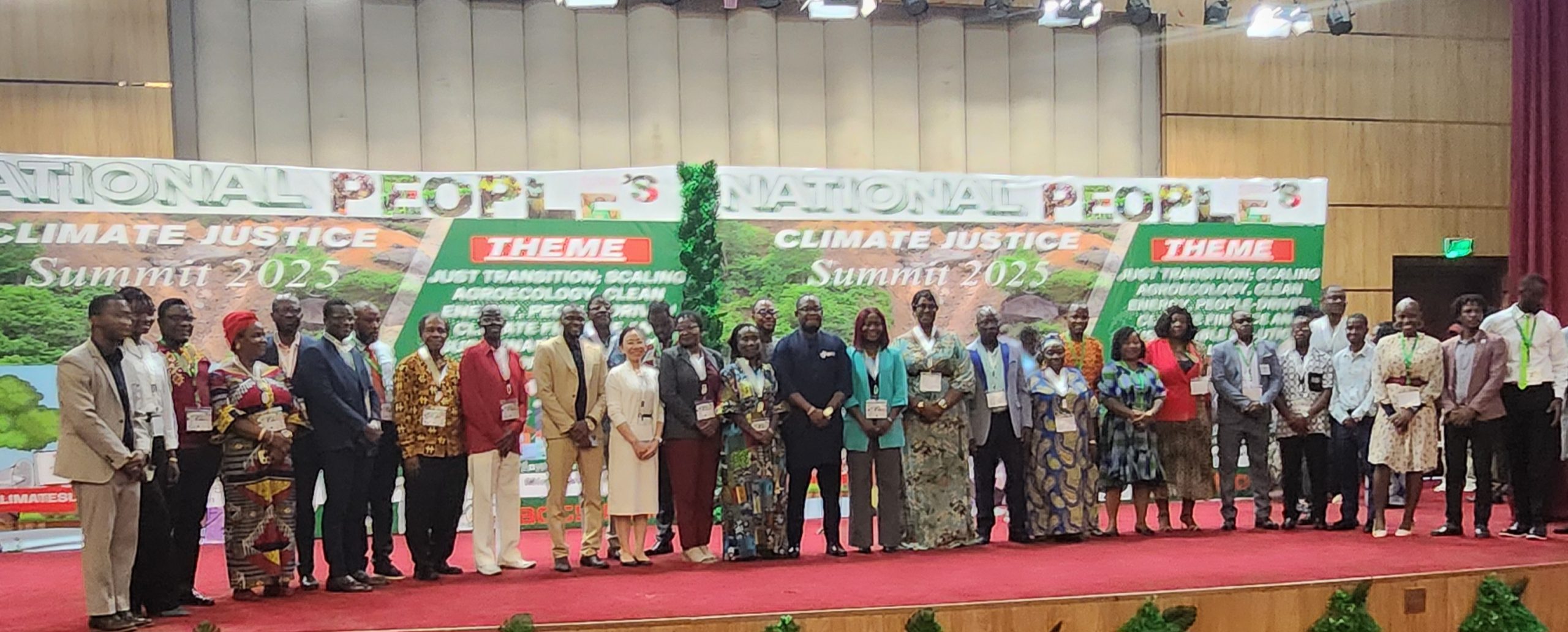
The call was made at the two-day National People’s Summit on Climate Justice, held from Monday, Dec. 15, to Tuesday, Dec. 16, 2025, at the Ellen Johnson Sirleaf Ministerial Complex in Monrovia.
Held under the theme “Just Transition: Scaling Agroecology, Clean Energy, People-Driven Climate Finance and Sustainable Solutions for Liberia,” the summit brought together government officials, ActionAid Liberia’s local and international partners, civil society groups and development stakeholders.
Speaking at the opening, ActionAid Liberia Country Director Madam Elizabeth Gbah Johnson said the summit was intended to move beyond dialogue and push for structural changes in how climate policies are designed and financed.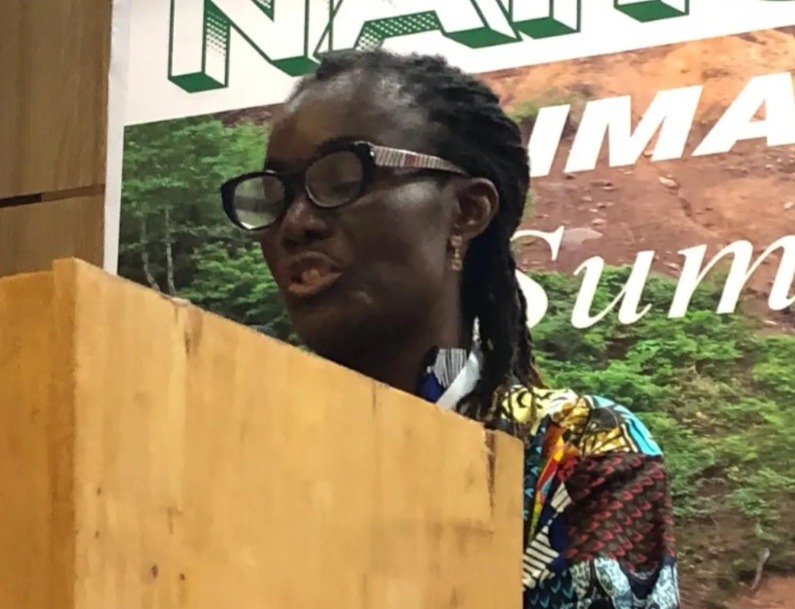
“We come together not just to discuss climate change, but to confront inequality and demand a just transition where policies, finance and technology deliver dignity and resilience to those who bear the greatest burden of the climate crisis,” Johnson said.
She pointed to outcomes from the inaugural 2024 summit, including stronger engagement between civil society and government, increased participation of women and youth in Liberia’s Nationally Determined Contribution (NDC) 3.0 process, and commitments to review extractive sector concessions. Despite those gains, she warned that communities continue to face flooding, coastal erosion, energy poverty and limited access to climate finance.
“Climate justice is social justice,” Johnson said. “Solutions must be community-led, gender-responsive and rights-based.”
She outlined five priorities for the summit: people-driven climate finance; scaling agroecology; renewable energy and land access; accountability under the Comprehensive Africa Agriculture Development Programme (CAADP); and disaster preparedness.
“Nothing about us without us,” she added. “Ambition is only meaningful when it is time-bound, budgeted and publicly tracked.”
Loretta Aletha Pope-Kai, head of the National Civil Society Council of Liberia, said climate impacts are already disrupting livelihoods and deepening inequality.
“Climate justice demands that those who contributed the least to the crisis do not bear its greatest burdens,” Pope-Kai said, calling for policies that prioritize women, youth, persons with disabilities and the use of indigenous knowledge.
Representing the Ministry of Finance and Development Planning, Deputy Minister for Administration Bill McGill Jones said climate change is no longer solely an environmental issue but a development and economic challenge.
He announced the establishment of a Climate Integration and Financing Office at the ministry to mainstream climate action into national planning and budgeting. Jones said Liberia has secured about $573 million for the implementation of NDC 2.0, with $213 million disbursed as of December 2024.
However, he cautioned that commitments under NDC 3.0 will require predictable and sustainable financing.
National Disaster Management Agency Executive Director Ansu Dulleh said climate justice and disaster risk management are inseparable, citing recurrent flooding, declining agricultural productivity and rising economic losses.
“Fragmented responses are no longer sufficient,” Dulleh said, urging integrated and inclusive approaches.
The summit featured panel discussions on climate finance frameworks, agroecology and CAADP implementation, renewable energy and green jobs, land rights for women and youth, and disaster preparedness systems.
At the close of the meeting, participants signed a communiqué reaffirming their commitment to addressing climate-related challenges in the best interest of Liberia.
Comments are closed.