
8 Mins Read
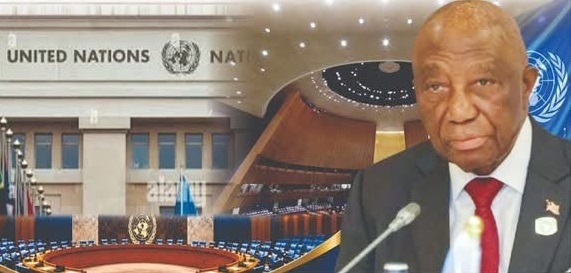
ADNews-Monrovia, Liberia: President Joseph Nyuma Boakai Sr. has announced that Liberia will assume the rotating presidency of the United Nations Security Council in December 2026, describing the development as a major diplomatic milestone that will strengthen the country’s role in international peace and security.
President Boakai made the announcement on Monday, October 26, 2026, during a ceremony marking United Nations Day at the Ministry of Foreign Affairs in Monrovia.
Speaking at the event, the Liberian leader reflected on the country’s growing international standing, highlighted its historical contributions to the United Nations, and called for reforms to strengthen the global body’s ability to respond to emerging challenges.
The President described Liberia’s election to the Security Council in 2025 as a significant diplomatic achievement, noting that the country secured a majority vote in the UN General Assembly for a full two-year term as a non-permanent member.
He said the election should not simply be described as Liberia’s return to the Council, arguing that the circumstances surrounding its previous participation differed significantly from the country’s latest election.
“Some have described it as Liberia’s return to the Security Council, but our achievement deserves a more precise account,” President Boakai stated.
According to him, Liberia’s previous participation in 1960 followed a negotiated arrangement with Ireland after six weeks and 13 rounds of inconclusive voting. Under that arrangement, the two countries agreed to share the contested seat for one year each.
However, President Boakai explained that Liberia’s 2025 election secured the country a full two-year mandate through a majority vote in the General Assembly, marking a significant difference from the earlier arrangement.
He also noted that Liberia was the last of the four African countries that signed the UN Charter in 1945 to be elected to the Security Council.
The President described the achievement as an opportunity for Liberia to contribute more directly to international decisions concerning peace and security.
Boakai Highlights Historic Opportunity
President Boakai said Liberia’s forthcoming presidency would provide an important opportunity for the country to demonstrate leadership on the international stage.
“For the first time, a sitting President of Liberia will preside in the Council chamber,” he announced.
He pledged that Liberia would approach the responsibility with humility, drawing lessons from its painful history of civil conflict, national reconciliation, and the difficult process of rebuilding peace.
The President acknowledged that Liberia would assume the rotating presidency at a critical time for the United Nations, particularly as the international community prepares for the process of selecting a new Secretary-General.
He said Liberia’s experience with conflict and post-war recovery had given the country valuable lessons to contribute to international discussions on peace-building and security.
The December presidency is expected to provide Liberia with an opportunity to guide the Council’s work during its month-long leadership, within the responsibilities and procedures governing the body.
President Pays Tribute to UN Peacekeepers
Reflecting on Liberia’s relationship with the United Nations, President Boakai paid tribute to the organization for its contributions to the country’s recovery following 14 years of civil conflict.
He recalled that following the signing of the Comprehensive Peace Agreement on August 18, 2003, the United Nations deployed approximately 15,000 troops, more than 1,000 police officers, and civilian personnel to support Liberia’s peace process.
From 2003 to 2018, the United Nations Mission in Liberia (UNMIL) played a significant role in maintaining security, supporting reconciliation, and helping rebuild national institutions.
President Boakai also acknowledged the contributions of the Economic Community of West African States (ECOWAS), the African Union, and other international partners that worked alongside the United Nations to facilitate dialogue and provide humanitarian assistance during the country’s conflict.
He expressed gratitude to the peacekeepers and civilian personnel whose efforts contributed to ending the war and supporting Liberia’s transition toward peace.
“Liberia has witnessed firsthand the fulfillment of the principles and purposes we helped establish in 1945,” he said.
Liberia was among the original signatories of the United Nations Charter, which established the organization in the aftermath of World War II to prevent future conflicts and promote cooperation among nations.
According to the President, Liberia’s experience demonstrates the importance of international solidarity and collective action when countries face crises that threaten peace and stability.
Calls for Stronger United Nations
Beyond celebrating the achievements of the United Nations, President Boakai challenged the international community to examine whether the organization remains adequately equipped to address the changing realities of the modern world.
He identified artificial intelligence, multipolarity, climate change, irregular migration, deepening inequality, and growing frustration among young people as challenges requiring stronger international cooperation.
The President argued that the global community must move beyond a narrow focus on preventing wars and strengthen collective efforts to address economic, environmental, technological, and social problems that individual countries cannot resolve independently.
“For developing countries like Liberia, the stakes are especially high,” he said.
Boakai called for an international system that promotes women’s rights and empowerment, tackles poverty, advances sustainable development, and ensures that vulnerable countries have a meaningful voice in global decision-making.
He stressed that Liberia must remain actively involved in shaping the international order rather than standing on the margins of multilateral diplomacy.
“That international order is being shaped now, and Liberia is at the table,” he declared.
The President said Liberia recognized both the privilege and the responsibility associated with participating in decisions that could influence the future of the United Nations and the wider international system.
He emphasized that developing countries should not be excluded from discussions on global challenges that directly affect their populations.
Commends Foreign Affairs Ministry
President Boakai also commended the Ministry of Foreign Affairs for incorporating Liberia’s diplomatic history into this year’s United Nations Day celebration.
He stressed the importance of ensuring that young Liberians understand their country’s historical contribution to international diplomacy and appreciate the need to maintain constructive relationships with other nations.
The President expressed appreciation for a billboard erected by the Ministry highlighting his administration’s foreign policy achievements. He accepted the recognition on behalf of government officials, diplomats, and other personnel involved in advancing Liberia’s international engagement.
“In just three years, Liberia has advanced foreign policy objectives that had eluded us for decades. This progress did not happen by chance,” he stated.
Boakai specifically praised the Minister of Foreign Affairs, the Ministry’s leadership, members of the Policy Advisory Council, and Liberian ambassadors and diplomatic personnel serving in missions around the world.
He credited their dedication, hard work, and patriotism with contributing to Liberia’s international standing and strengthening its diplomatic relationships.
The President said the recognition should encourage continued commitment to national development and the pursuit of the country’s foreign policy objectives.
Liberia Reaffirms Commitment to Global Cooperation
As Liberia prepares to assume the Security Council presidency, President Boakai reaffirmed his administration’s commitment to multilateral cooperation, international peace and security, and a global order that allows all nations and peoples to prosper with dignity.
He described United Nations Day as more than an annual commemoration, saying it serves as a reminder of the importance of international partnership, cooperation, and solidarity among nations.
The President expressed optimism about the future of the United Nations and the ability of countries to work together to address shared challenges.
For Liberia, the December presidency represents a major diplomatic milestone and an opportunity to bring its experience in peace-building, reconciliation, and post-conflict recovery into international discussions on security and cooperation.
The development comes as the United Nations faces growing demands to respond to armed conflicts, climate-related challenges, technological changes, and inequalities affecting countries across different regions.
President Boakai’s message was that Liberia’s place at the Security Council table carries both historical significance and a responsibility to contribute constructively to decisions affecting the international community.
Comments are closed.