
6 Mins Read
ADNews-Monrovia, Liberia: Leading voices from government, civil society, the legal profession, and the media have called for an independent panel to investigate Liberia’s growing illicit drug trafficking crisis, warning that ongoing investigations could face a credibility deficit if allegations involving state institutions and security actors are not independently examined.
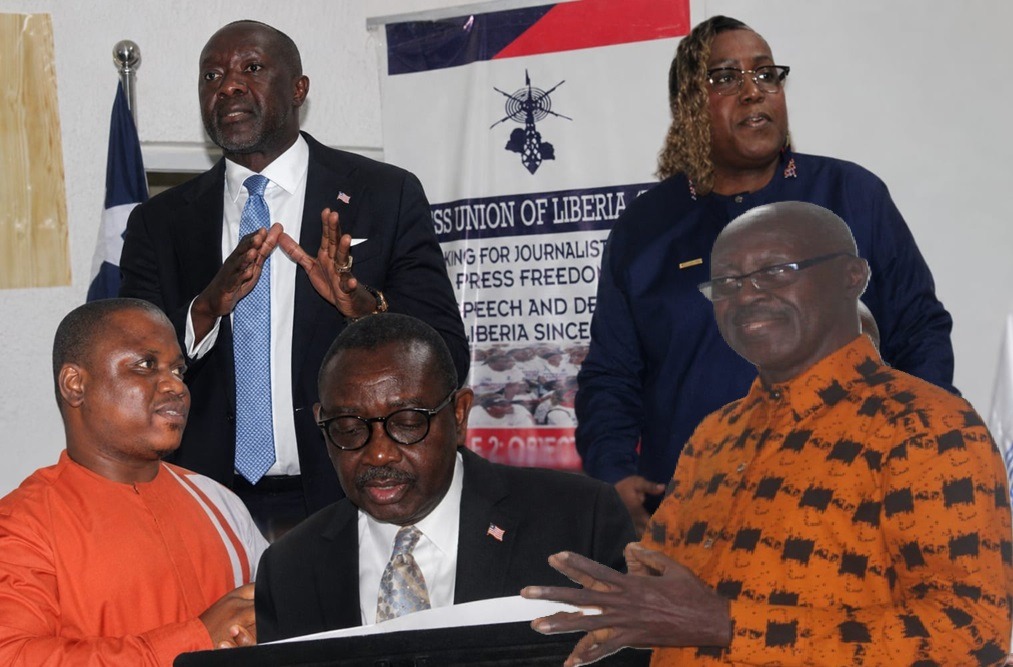
The call was made Wednesday, August 26, 2026, during the relaunch of the Edward Wilmot Blyden Intellectual Discourse, the flagship intellectual forum of the Press Union of Liberia (PUL), held in Monrovia.
Veteran journalist Aaron Kollie, Center for Transparency and Accountability in Liberia (CENTAL) Executive Director Anderson Miamen, and Gbarpolu County Senator Amara Konneh questioned the independence and credibility aspects of the ongoing investigations.
The panelists argued that where institutions or individuals are alleged to have links to criminal networks, those same institutions should not be placed in a position to investigate themselves.
However, Justice Minister and Attorney General Cllr. Oswald Tweh defended the government’s ongoing investigative efforts, stressing that while the government has no objection to an independent panel, current investigations must continue.
Cllr. Tweh pointed to arrests, prosecutions, and cooperation with international partners, including the U.S. Drug Enforcement Administration (DEA), Homeland Security, and the FBI, as evidence of progress.
“Independent investigation, yes, that might come later. But right now, we don’t see it. Everything was open to our partners – all the evidence, all the leads – and they applauded us,” Cllr. Tweh said.
He further argued that the drug-trafficking challenge requires government to look beyond individual arrests and examine weaknesses across the entire chain through which illicit drugs may enter, move through, and leave Liberia.
Cllr. Tweh said the government’s response must include identifying institutional weaknesses, investigating possible facilitation or corruption, strengthening screening and intelligence, improving coordination among law enforcement agencies, and dismantling criminal networks.
“If narcotics can move through a chain of handling, screening or transportation, then that chain must be examined and strengthened,” he said.
According to the Justice Minister, strong institutions are not institutions that claim to be perfect, but those capable of detecting failures, correcting them, investigating wrongdoing, and continuously improving.
Konneh Calls for Equal Justice
Senator Amara Konneh urged authorities to ensure that the fight against narcotics trafficking does not become selective, saying equal application of the law is essential to restoring public confidence.
“I want to focus on win-win. I really want our country to win. I want everybody to win,” Konneh said.
He warned that selective justice could undermine public trust, while equal application of the law could strengthen confidence in Liberia’s justice and security institutions.
Konneh also called for swift prosecution of cases arising from the drug investigations, suggesting a 90-day target where legally and practically possible.
He said the Legislature would support special financing, if requested by the President, to facilitate the speedy prosecution of cases arising from the narcotics investigations.
The senator also argued that transparent trials could serve both the public and security institutions.
“A swift public trial clears innocent officers and permanently removes compromised ones,” Konneh said, adding that investigators must be perceived as more credible than the suspects they investigate.
LNBA Seeks Stronger Institutions
The President of the Liberia National Bar Association (LNBA), Cllr. Juah Lawson, stressed the need for a coordinated and adequately resourced national response.
She said the Liberia Drug Enforcement Agency (LDEA), Liberia National Police (LNP), Ministry of Justice, Financial Intelligence Agency, Customs, Immigration authorities, and Judiciary must be adequately resourced, professionally staffed, institutionally independent, and effectively coordinated.
According to Cllr. Lawson, drug trafficking flourishes where institutions are weak, investigations are compromised, borders are porous, evidence disappears, prosecutions fail, and criminal networks are able to purchase influence.
CENTAL Pushes Recruitment and Oversight Reforms
Mr. Anderson Miamen of CENTAL called for increased support to security-sector institutions, including resources, logistics, and technology.
He also advocated broader reforms in recruitment and vetting processes within security institutions.
Miamen said reforms should not focus solely on vehicles, equipment, and other logistical support, but should also address how security personnel are recruited, vetted, and supervised.
He called for amendments to the law establishing the LDEA to make recruitment more inclusive, transparent, and participatory.
Miamen further supported the establishment of independent panels similar to mechanisms used in other integrity-focused institutions.
Journalist Calls for Rehabilitation Center
Veteran journalist Aaron Kollie warned that Liberia’s drug crisis should not be treated solely as a law-enforcement problem.
He argued that the country must also address the impact of drug abuse on young people and invest in rehabilitation.
“You can construct all the roads, all the market buildings, and all the political projects. If you do not address the fundamental problem and the root cause of the drugs problem affecting the foundation of our country, the young people, it will all be meaningless,” Kollie said.
He called for serious consideration of the reconstruction or establishment of a rehabilitation center for people affected by drug abuse.
Kollie also backed stronger institutional support for the LDEA and other agencies involved in the fight against illicit drugs, including proper vetting of personnel to reduce the risk of corruption and compromise.
During today’s activities at the PUL headquarters in Monrovia, the Edward Wilmot Blyden Intellectual Discourse was formally relaunched by former PUL President Gabriel Williams, who called for a collective national response to illicit drug trafficking.
The forum brought together representatives of government, civil society, the legal profession, the media, and other stakeholders to discuss institutional accountability and reforms amid Liberia’s ongoing fight against narcotics trafficking.
PUL President Julius Kanubah commended the panelists for what he described as their expertise and factual analyses.
Kanubah said the perspectives shared during the forum would contribute to public understanding, transparency and accountability, while helping advance institutional reforms in Liberia’s collective effort to combat illicit drugs.
The discussions featured a central challenge facing Liberia: how to pursue aggressive narcotics investigations while ensuring that those investigations remain credible, transparent, lawful, and trusted by the public.
Comments are closed.