

4 Mins Read
ADNews-Ganta Nimba-Liberia: Liberia’s government is seeking nearly US$900 million to modernize its ports and transport systems, an investment officials say is critical to lowering trade costs, easing congestion, and positioning the country as a competitive maritime and logistics gateway in West Africa.
The plan was unveiled at the First National Infrastructure Conference in Ganta City, where policymakers, private sector leaders, and development partners assessed chronic weaknesses in Liberia’s transport network and outlined reforms aimed at accelerating economic growth.
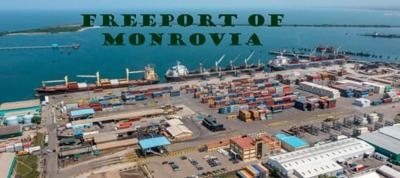
More than half of the proposed funding — about US$550 million — would be directed to the Freeport of Monrovia and the development of an inland dry port in Nimba County, according to the National Port Authority (NPA). The remaining US$350 million would target public transport and cargo movement nationwide.
Freeport Upgrade at the Core
At the center of the proposal is the Freeport of Monrovia, Liberia’s main maritime gateway, which officials say lacks the depth, equipment, and capacity to handle modern vessels.
Mulbah Gaylu Gwesa, NPA executive director for ports and harbors, told the conference that the authority has drafted a five-year strategic plan to upgrade the Freeport and construct a dry port between Ganta and Saclepea.
“Nearly 90 percent of vessels flying the Liberian flag do not berth here because the port cannot accommodate larger ships,” Gwesa said. “Once the port meets international standards, it will significantly increase government revenue and strengthen the economy.”
Plans include dredging, modern cargo-handling equipment, improved access roads, rail connections, and land acquisition for future expansion. Gwesa said preparatory conditions for the dry port are largely complete, pending financing.
The inland facility is intended to decongest Monrovia, speed up cargo clearance, and directly link production zones in northern Liberia to international shipping routes.
Regional Trade Potential
Maritime analysts at the conference said upgraded ports could elevate Liberia’s role in regional trade, especially for landlocked countries such as Mali, Burkina Faso, and Niger, which rely on distant or congested ports for imports and exports.
With an Atlantic coastline and proximity to the Mano River Union, Liberia could attract transit cargo if port efficiency, rail connectivity, and road networks are improved.
“Ports are economic engines,” one panelist said. “If Liberia modernizes its system, it can compete with established regional corridors.”
Transport, Rail, and Waterways
Beyond ports, the government plans to invest about US$350 million through the National Transit Authority to modernize domestic transport. Proposals include acquiring minibuses, cargo trucks, larger passenger buses, and introducing electric buses to improve efficiency and reduce operating costs.
NTA officials said new cargo trucks would help farmers move produce from rural areas to markets, linking transport reform to food security.
Existing rail lines connecting Yekepa to Buchanan and Bong Mine to Monrovia were also highlighted as underutilized assets. Officials said water transport along the Montserrado River is being explored, though pollution, sanitation problems, and weak infrastructure remain obstacles.
Private Investment, Persistent Challenges
Public-private partnerships featured prominently in the discussions, with speakers urging greater private sector participation to mobilize capital and improve efficiency.
The Ministry of Transport announced plans to privatize domestic airports, strengthen revenue collection, and roll out the Toll, On-Demand, and Delivery system on major highways. Diverting bulk cargo, such as rice imports, to ports like Buchanan was cited as a way to boost toll revenue and attract logistics investors.
Despite the ambitious agenda, officials acknowledged major hurdles, including poor road connectivity, environmental concerns affecting waterways, and limited use of commercial rail services. Liberia has more than 3,000 kilometers of primary roads, but only about half are completed or properly maintained.
Experts stressed that future projects must integrate sustainability, environmental protection, public terminals, and security systems such as CCTV and smart lighting.
If fully implemented, the US$900 million initiative would mark one of Liberia’s most extensive infrastructure overhauls in years. Analysts say it could unlock trade, reduce the cost of doing business, and help the country capitalize on its geographic advantage.
“We should not delay by waiting for investors,” Gwesa said. “Investing in our ports will generate the revenue we need.”
Comments are closed.