
Law Reform Commission, Human Rights Watch (NY) and Civil Society Human Rights Advocacy Platform Hold Pertinent Discussions
With Focus on One Voice in Establishment of War and Economic Crimes Court

9 Mins Read
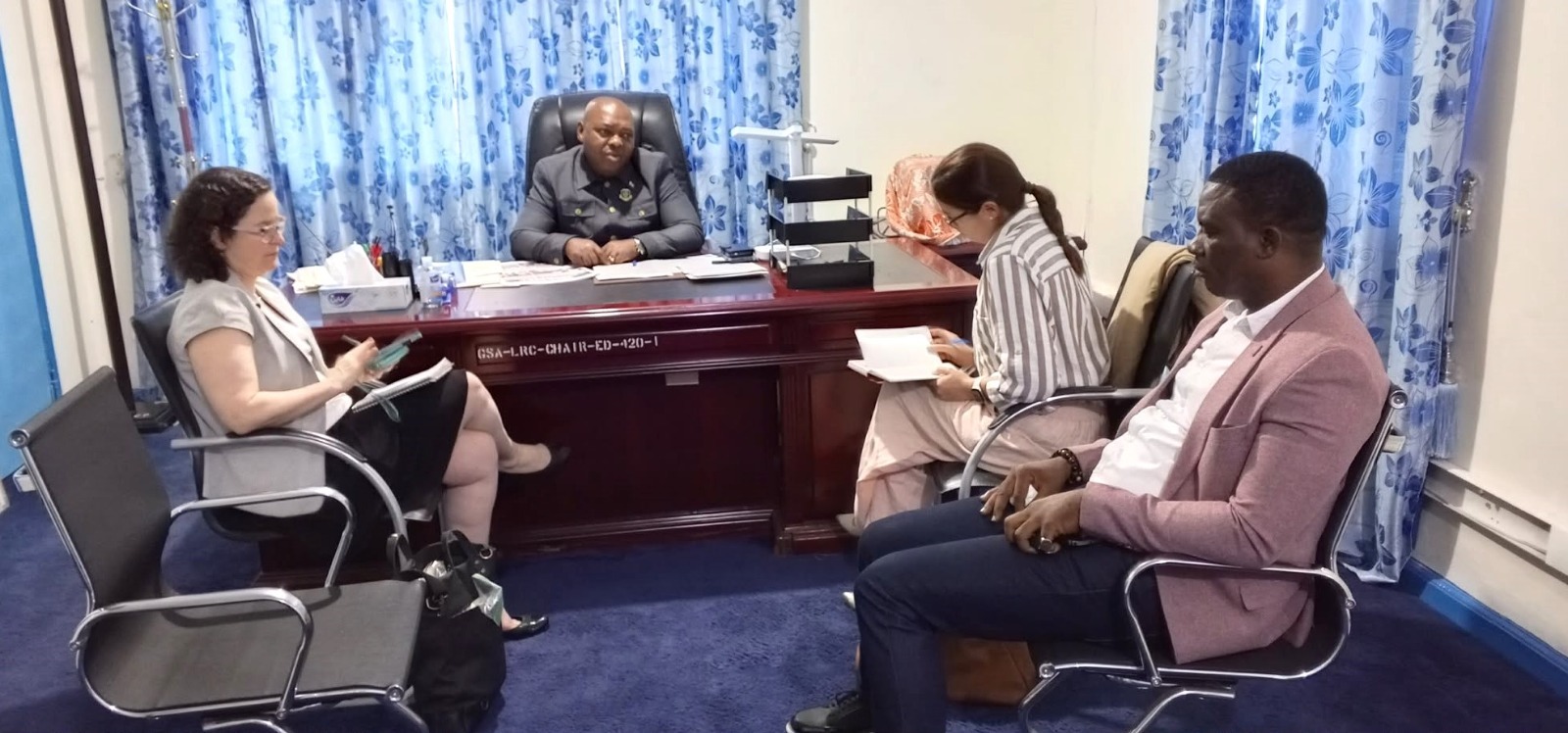
ADNews-Monrovia, Liberia: A three-man delegation from Human Rights Watch (New York) and the Civil Society Human Rights Advocacy Platform have held pertinent discussions with the Chairman and Chief Executive Officer (CEO) of the Law Reform Commission (LRC) at the Commission’s office at the intersection of UN Drive and Old CID Road in Mamba Point, central Monrovia.
The three-man team comprised of Michelle E. Reyes Milk – Senior Counsel, International Justice Program at Human Rights Watch in New York, USA; New York, Elise Keppler – Executive Director – Global Justice Center – Human Rights Watch in New York, USA and Adama Dempster, head of Secretariat of a network of Liberia’s leading 30 human rights groups – under the canopy of The Civil Society Human Rights Advocacy Platform, which coordinates civil society actors advocating for human rights, justice and the prosecution of alleged war criminals.
Stating the purpose of their courtesy visit to the offices of the Law Reform Commission and to hold discussions with LRC Chair/CEO, Cllr. Bornor M. Varmah, the Senior Counsel of the International Justice Program at Human Rights Watch – New York, Michelle E. Reyes Milk stated their visit was in the context of the Transitional Justice Conference in Liberia and decided to use the opportunity to meet with key actors who are working not only on transitional justice but also specifically on accountability issues and who are following the process for the establishment of the War and Economic Crimes Court for Liberia. She noted the team wanted to hear the thoughts of actors, including the LRC, on how the process has been going.
Ms. Reyes Milk applauded the Executive branch of Government in Liberia for demonstrating the political will to the process leading the to establishment of the War and Economic Crimes for Liberia, noting their visit at the LRC, afforded them the opportunity to hear both what role the LRC is playing in the process and an assessment on the way forward, as well as how can Human Rights Watch – NY and international partners can impact the process.
Welcoming the delegation, LRC Chair/CEO, Cllr. Bornor M. Varmah iterated how very much the commission is interested in the conversation to bring justice to the process, to bring closure to the atrocities committed during the civil conflict, by consummating the conversation with efforts to establish the War and Economic Crimes Court in Liberia. “If you have followed through very well, you will get to understand that the Liberia National Bar Association (LNBA) that I currently head, and even the Law Reform Commission (LRC) that I have just taken over recently, are pivotal institutions that have immensely contributed to the process.”
“Adama Dempster called me and wanted us to talk a little on Transitional Justice relative to the establishment of the War and Economic Crimes Court on Liberia. So, because we place so much premier on the establishment of the court, I thought it was important that we honor your request for the meeting this morning. That’s why we are here. So, welcome to the Law Reform Commission,” Chairman/CEO of the LRC stated.
Recounting the process leading to the establishment of the Office for the War and Economic Crimes Court – Liberia (OWECC-L) and subsequent appointment of its Executive Director, Cllr. Varmah highlighted the role of Liberia National Bar Association and civil society organizations and actors, in championing all the discussions that led to the ongoing process in relations to the establishment of the War and Economic Crimes Court for Liberia.
Giving his perspective on ongoing process as National President of the LNBA and Chairman/CEO of the Law Reform Commission, Cllr. Varmah called for recalibration, working with civil society, the Independent National Commission on Human Rights (INHCR) and OWECC-L, with reports that two draft bills have been presented to the President of Liberia for the establishment of the court. He said the Law Reform Commission will take the lead to harmonize those bills before the President before enactment. “There is a need to get together and sort out what impediment that may tend to undermine the process. The civil society cannot have its own perspective as far as the legislations are concerned, Cllr Barbu of OWECC-L has his own perspectives and maybe the LBNA as well. So, we quickly need to draw a line – between Cllr Barbu (OWECC-L) on one side and all the civil society organizations on the other side and come together quickly for the process to go smoothly”.
“From the perspective of the LNBA, we have over the time indicated that we need a multi-prone approach. Cllr. Barbu’s Secretariat could lead the processes to establish the court, but to operate the court is a different matter altogether. I have spoken to the Ministry of Justice and government in its entirety that there is a need to begin to train prosecutors and investigators, because the erstwhile Truth and Reconciliation Commission (TRC) report may not be seen as the practical material evidence that will be taken to court. I have indicated that and on record for that. A multi-prone approach could mean while we are running to legislature to pass the law we should consider training opportunities for the stakeholders. This is a new phenomenon for our jurisdiction, so we need to train judges, prosecutors, and investigators among others. Even if we settle for the Hybrid methodology, people coming out of the country will have to come to participate in the process and it means they must come and get acquainted with the legal system.”
“When I appeared for my confirmation hearing some time ago, I was quizzed by some of the Senators on this one specifically. And we, our responsibility at the Law Reform Commission is to guide the process legally, judicially and expeditiously consistent with the laws of our country. There was an attempt by some of the Senators to proffer a bill, even before Adama and civil society proffered those bills, to make it national process. We had to provide education that this process is internationally driven. Liberia has ceded to conventions, so, we needed to go back to that. Nobody will want to support a process that is purely nationalized in the context of international laws, especially, the crimes that were allegedly committed during the civil crisis were international crimes. So, that’s where we are. They are looking up to us for guidance. But I think among us who happen to be major proponents, like the LNBA, civil society and the LRC need to come together very quickly.”
On his part, Adama Dempster, head of Secretariat of a network of Liberia’s leading 30 human rights groups – under the canopy of The Civil Society Human Rights Advocacy Platform, extolled LNBA’s role and now that Cllr. Varmah sits at the Law Reform Commission as its Chair/CEO, to harmonize and bring the laws together will be cardinal in having one voice for the establishment of the War and Economic Crimes Court for Liberia. “This is a process that civil society fought for – fighting for justice. And we thought that justice delayed right now is not helping the country. Victims are dying as well as witnesses, and alleged perpetrators are also dying. You have two Executive Orders, and the last Executive Order is ending in April 2026 without any draft. It will interest you to note that it was only because of what the Human Rights Commission and civil society proffered in November 2025 is what compelled Cllr. Barbu to go to Gbarnga to do something. And that roadmap is for 2027. We feel that wasting time is not necessary for the process right now. We will be going to elections, and there will be division within the legislature because opposition may want to take a side and support a consolidated approach. It is better to have general endorsement than extend a time that will not have any justification. So, these are things that we as civil society and human rights commission should cut ahead of and focus on creating the court.”
Meanwhile, LRC Chair/CEO, Cllr. Varmah disclosed that the Commission will take the lead to harmonize those two draft bills submitted to the president. “The LRC has the mandate for law reform in Liberia. That is why the LRC will take the lead to recalibrate the process by bringing stakeholders to together to harmonize the bills. The president may not be aware of the internal contradictions, but a conversation was held with the Minister of State. So, we must harmonize those bills before that happens. Civil society has been part of this process from the very beginning, let us hear their perspective in all of this, Cllr. Varmah concluded.
Comments are closed.