

6 Mins Read
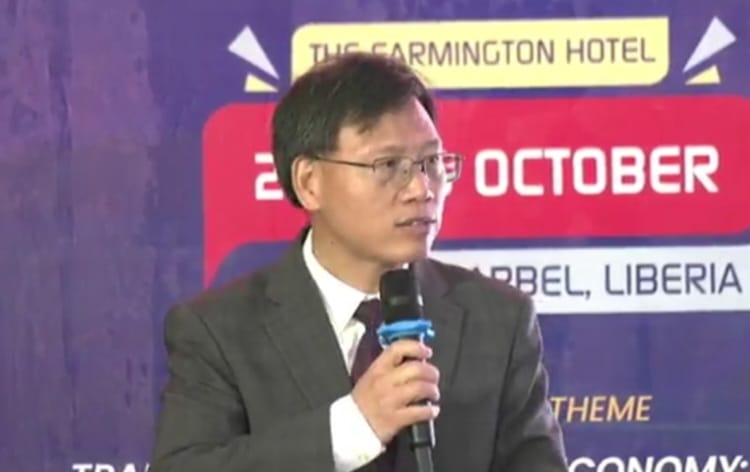
ADNews-Monrovia,Liberia: Chinese Ambassador to Liberia Yin Chengwu has reaffirmed China’s readiness to support Liberia’s mining and energy sectors through investment, technology transfer, capacity building, and renewable energy cooperation.
Speaking at the Liberia International Mining and Energy Conference on Wednesday, October 28, 2026, Ambassador Yin said Liberia’s mineral resources could serve as a major driver of economic growth, job creation, industrialization, and economic diversification if properly managed and developed sustainably.
He described the conference as an important platform for the government, investors, industry players, and other stakeholders to explore partnerships and identify practical investment opportunities in the country’s mining and energy sectors.
According to the Chinese envoy, greater investment in these sectors is essential to transforming Liberia’s natural resource wealth into tangible development benefits for its people.
“Mining is a pillar of Liberia’s economy and offers significant potential to generate revenue, create jobs, attract investment, and drive economic transformation,” Ambassador Yin said.
He identified three key areas for consideration, emphasizing the importance of the Boakai administration’s ARREST Agenda, China-Liberia mining cooperation, and the need to ensure that mineral development produces lasting benefits for ordinary Liberians.
Ambassador Yin said President Joseph Nyuma Boakai’s ARREST Agenda appropriately connects Liberia’s natural resource potential with its national development priorities.
He noted that Liberia possesses substantial mineral deposits that, with adequate investment, modern technology, infrastructure, and effective management, could generate increased public revenue, create employment opportunities, strengthen local industries, and support economic diversification.
Referring to President Boakai’s second State of the Nation Address in January 2025, the Chinese ambassador recalled that China had funded a mineral resource survey in Liberia several years ago.
He said the survey represented one of the most comprehensive scientific investigations of Liberia’s mineral resources in more than five decades.
According to Ambassador Yin, data from the survey, analyzed by the Ministry of Mines and Energy, identified several mineral resources in Liberia, including iron ore, diamonds, gold, lithium, neodymium, silver, nickel, zinc, uranium, chromium, lead, tin, cobalt, niobium, tantalum, manganese, copper, zirconium, and monazite.
He stressed that the country must move beyond extracting raw minerals to processing more resources locally, expanding the mining value chain, and establishing stronger connections between mining, energy, infrastructure, and other sectors of the economy.
The ambassador said the ARREST Agenda’s emphasis on attracting investment, improving geological information, formalizing small-scale mining, and increasing value addition was necessary to ensure that Liberia’s mineral wealth generates long-term benefits for its citizens.
Ambassador Yin reaffirmed China’s willingness to deepen cooperation with Liberia in four major areas: mineral resource governance and capacity building, mining investment and industrial value addition, energy cooperation and green technology, and responsible and sustainable mining development.
He referenced Chinese President Xi Jinping’s proposals for advancing China-Africa mining cooperation, which emphasize mutual benefit, friendly consultation, innovation, African ownership of natural resources, high-quality development, and a fair and open business environment.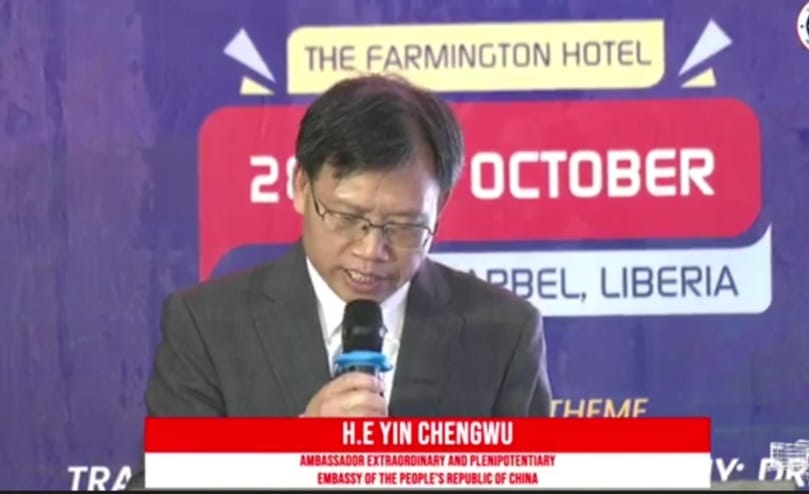
On capacity building, Ambassador Yin said China was prepared to share its experience and technical expertise in geological surveys, mineral resource assessment, and mining skills training.
He added that such cooperation could help Liberia develop a mining strategy aligned with its national priorities while promoting the responsible and scientific use of mineral resources.
Regarding investment and industrial development, the Chinese ambassador pointed to the contributions of Chinese enterprises to Liberia’s mining sector, including the Bong and Bomi East iron ore projects.
He said the projects had created more than 500 jobs for Liberians and supported infrastructure development, including roads and port facilities.
Ambassador Yin also said China is prepared to work with Liberia to explore sustainable financing arrangements, diversify funding sources, and address investment concerns affecting the development of the mining sector.
He emphasized that Chinese companies could contribute through mining technology, infrastructure construction, technology transfer, and technical training to expand Liberia’s domestic mining value chain and increase the value of its mineral resources.
On energy cooperation, Ambassador Yin said reliable and affordable electricity was essential to mining, industrialization, and broader economic development.
He noted that China had developed substantial capabilities in solar, wind, and hydropower technologies and was ready to explore renewable energy projects and supporting infrastructure with Liberia.
According to him, such cooperation could support President Boakai’s goal of improving access to electricity by 2030 while promoting more efficient and sustainable mining operations.
The Chinese envoy also called for greater attention to environmental protection and responsible mining practices.
He said China supported the adoption of technologies such as smart mining, green energy, and cleaner mineral processing to reduce environmental damage and improve the sustainability of mining operations.
He further urged mining companies to fulfill their social responsibilities, restore mining sites, protect local communities, and support the Liberian government’s efforts to combat illegal mining.
Ambassador Yin stressed that the success of mining cooperation should be measured by the long-term benefits it delivers to the Liberian people.
He observed that mining projects require substantial initial capital and long investment periods, making a stable, transparent, and equitable business environment critical to attracting responsible investors.
He said China welcomed genuine support from all partners for Liberia’s development and was prepared to work with the Liberian government to maintain a predictable investment climate for the mining sector.
The ambassador also cautioned against using critical mineral resources as instruments in geopolitical competition, emphasizing the importance of openness and cooperation.
“China is ready to work with Liberia and other international partners on the basis of mutual respect, equality, and mutual benefit,” he said.
He expressed confidence that Liberia’s mineral resources could become a powerful engine for industrialization, modernization, economic diversification, and social development if managed wisely and developed sustainably.
In closing, Ambassador Yin urged participants at the Liberia International Mining and Energy Conference 2026 to use the gathering to strengthen partnerships, encourage responsible investment, and expand economic opportunities for the country.
He said sustained cooperation among the Liberian government, investors, industry stakeholders, and international partners would be important to ensuring that the country’s natural resources contribute to lasting national prosperity.
The conference brought together stakeholders to discuss investment opportunities and the future of Liberia’s mining and energy sectors.
Comments are closed.