

The Silence of the System: A Call for Truth, Transparency, and Accountability

6 Mins Read
ADNews-Monrovia,Liberia:The unfolding surrounding the drug seizure case, particularly the arrest of Paul.J King have cast a long shadow over the public conscience. What should have been a clear pursuit of justice increasingly resembles a stage play where the audience is expected to applaud before the final act has even been written. When the Inspector General of Police and the Joint Investigative Team moved to arrest Mr. King, Liberians were not handed answers; they were handed a puzzle with half the pieces missing.
The question that lingers is not whether an investigation should occur. The question is whether justice is steering the vehicle or merely riding as a passenger while political interests hold the wheel. If transparency is the best disinfectant, then this case appears to have been kept in a very dark room.
What became of the interrogation of Leroy Harris? Who is the individual reportedly connected to Biago of the LDEA? Why do some of the very people tasked with investigating crime appear to carry unresolved questions from their own past conduct? Is it true that certain individuals once marked for prosecution were quietly welcomed back through the back door after suspension? These are not trivial questions. They are cracks in the foundation, and no nation can safely build on concrete that is already splitting apart.
The speed of the arrest, contrasted with the apparent absence of publicly demonstrated evidence linking to a drug cartel, raises legitimate concerns. For six weeks, the public has been served a steady diet of allegations, yet the main course of proof remains mysteriously absent. Justice should be a lighthouse illuminating facts, not a fog machine obscuring them.
One cannot help but wonder whether a scapegoat is being led into the spotlight while other actors remain safely behind the curtain. The continuing uncertainty surrounding Michael Brown only deepens that suspicion. Public silence regarding his whereabouts has become an echo louder than any official statement. Why has the Inspector General remained silent? Is silence now the preferred language of accountability? Or is it being used as a blanket to cover uncomfortable truths, including questions surrounding his release from Kakata Prison?
When institutions speak loudly about some suspects but whisper about others, confidence in the system begins to erode. A scale of justice cannot command respect if the public suspects that one side is secretly being held down.
Equally troubling is the role of the media. Journalism is often called the watchdog of democracy, but a watchdog that stops barking when strangers enter the yard raises its own questions. Have investigative voices become satisfied with the sudden quietness of those leading the case? If the media chooses comfort over curiosity, it risks becoming not a witness to events but an accessory to omission.
The silence of civil society, the Senate, and prominent political figures concerning issues such as the extradition of Oscar Brown and the broader implications for GLS is also noteworthy. Public trust is not a bank account with unlimited funds. Every unanswered question is a withdrawal. Every act of silence is an overdraft.
The Real Question: What Is the True Objective?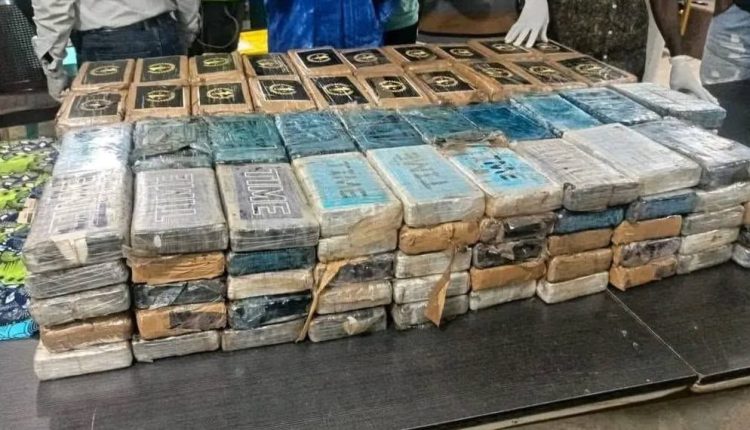
A growing number of observers are beginning to suspect that the scandal is about more than narcotics. It increasingly resembles a chessboard on which economic and political interests are moving pieces under the banner of law enforcement. If the ultimate objective is to cancel concessions, pressure GLS, or redirect public attention, then the nation deserves honesty, not theater.
The public narrative has become crowded with accusations, leaks, and dramatic claims. Yet amid all the noise, the most important question remains unanswered: who truly benefits from the confusion? When attention is diverted from the alleged architects of criminal activity and redirected toward convenient targets, justice risks becoming less a sword and more a prop.
The failure to aggressively pursue all individuals who may bear responsibility, including officials who were on duty at RIA on June 5, raises serious concerns. A chain is only as strong as its weakest link, but an investigation is only as credible as its willingness to examine every link equally. Selective scrutiny is not justice. It is choreography.
The Questions the Public Still Deserves Answered
The people of Liberia deserve clarity, not carefully managed ambiguity. They deserve answers to fundamental questions:
* What evidence exists against and why has it not been clearly presented to the public?
* Why was it reportedly claimed that the shipment was delivered to his residence, yet later allegations shifted toward storage?
* What exactly was discovered during the search of his home? Were there findings consistent with a drug operation?
* What is the current status of Michael Brown, and who may have facilitated or supported him?
* When did investigators identify him as a suspect, and what actions followed?
* Why have security agencies not provided satisfactory explanations regarding individuals believed to be connected to the investigation with questionable past records?
Truth does not fear sunlight. Only secrets do
The greatest danger to any society is not merely corruption, incompetence, or political manipulation. It is the normalization of unanswered questions. When citizens become accustomed to silence, accountability quietly packs its bags and leaves.
Liberia’s future cannot be built on speculation, selective justice, or political puppetry. The nation deserves a transparent investigation, impartial enforcement of the law, and leaders willing to let facts speak louder than narratives. Until then, the silence itself will remain the loudest testimony of all.
Comments are closed.