


3 Mins Read
ADNews-Monrovia,Liberia:A leaked draft amendment to the ArcelorMittal Liberia (AML) Mineral Development Agreement (MDA) could severely undermine Liberia’s sovereignty, the authority of President Joseph Nyuma Boakai’s administration, and the National Legislature, according to government insiders.
The proposed agreement reportedly contains provisions that grant AML sweeping powers over national infrastructure and future legislation, raising constitutional and policy concerns.
The draft amendment includes a “shall prevail” clause stating that if any Liberian law, regulation or concession conflicts with AML’s rights, the AML agreement will take precedence.
Analysts characterized the agreement as an instrument that lacks language, making it subject to the Liberian Constitution and national laws. The provision would, in effect, elevate a private contract to the status of national law, allowing AML’s agreement to override legislation such as the proposed National Rail Authority Act and the Public Procurement and Concessions Act.
Legal experts warn that such a clause would erode the principle of legislative supremacy and transfer key decision-making authority over rail and port infrastructure from the Liberian state to a private entity.
“This would weaken the government’s ability to pass or enforce future laws on public infrastructure, taxation, or competition,” a legal source said, adding that it could “erode Liberia’s sovereignty and prolong a monopoly that has limited investment for nearly two decades.”
Government’s Rail Authority and Multi-User Policy Threatened
The Boakai administration recently established the National Rail Authority (NRA) to regulate rail operations and guarantee independent, multi-user access to national rail assets. The NRA is a key component of the president’s ARREST Agenda for reform and economic diversification.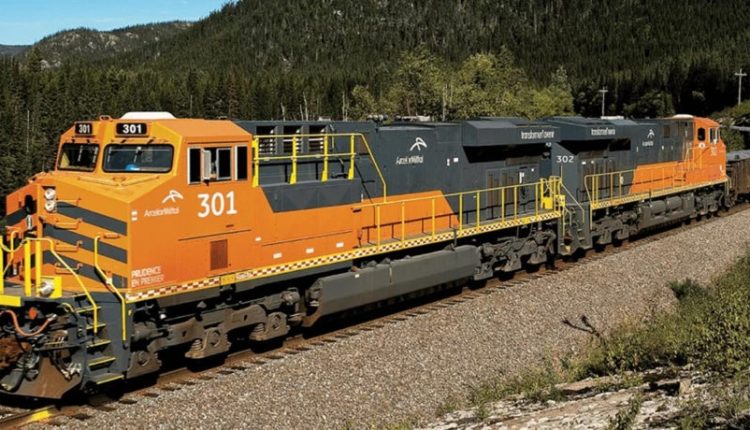
However, the AML amendment reportedly conflicts with this policy. It would allow AML to retain operational control of the Yekepa–Buchanan railway beyond 2030, link the transfer of control to traffic volumes that AML could influence, and even permit AML to automatically retake control if an independent operator’s contract ends “for any reason whatsoever.”
Furthermore, the amendment would enshrine AML’s rail standard operating procedures and multi-user agreement into law, making them unchangeable without AML’s written consent. That, would strip the NRA of regulatory authority and prevent the Legislature from enacting reforms.
“In effect, this amendment would nullify the government’s multi-user policy and the very purpose of the NRA, ensuring fair and transparent access for all users,” a senior transport official said.
Concession Law and Other Investors Undermined
Liberia’s concession framework requires that all major infrastructure projects operate under legislative approval, consistent with the Constitution and the Concessions Act.
The AML draft amendment, however, introduces an absolute supremacy clause that could allow AML’s concession to override other existing and future agreements.
Ratifying the amendment in its current form would create two parallel legal systems, one governed by the National Rail Authority and another by AML. This dual structure could discourage investment, trigger legal disputes, and undermine confidence in Liberia’s concession regime.
Broader Implications
Criticts say the proposed amendment, as written, is fundamentally incompatible with Liberia’s legal framework and the Boakai administration’s stated policy direction.
If approved, the amendment could:
Weaken sovereign control over national infrastructure;
Undermine the authority and independence of the Government and the NRA;
Breach the administration’s commitment to an independent, multi-user rail system;
Create widespread legal uncertainty for future concessions; and Damage investor confidence in Liberia’s economic environment.
“Approving the amendment in its current form would hand over control of national infrastructure to a private entity,” a government insider said. “That language should not be approved.”
Comments are closed.