

7 Mins Read
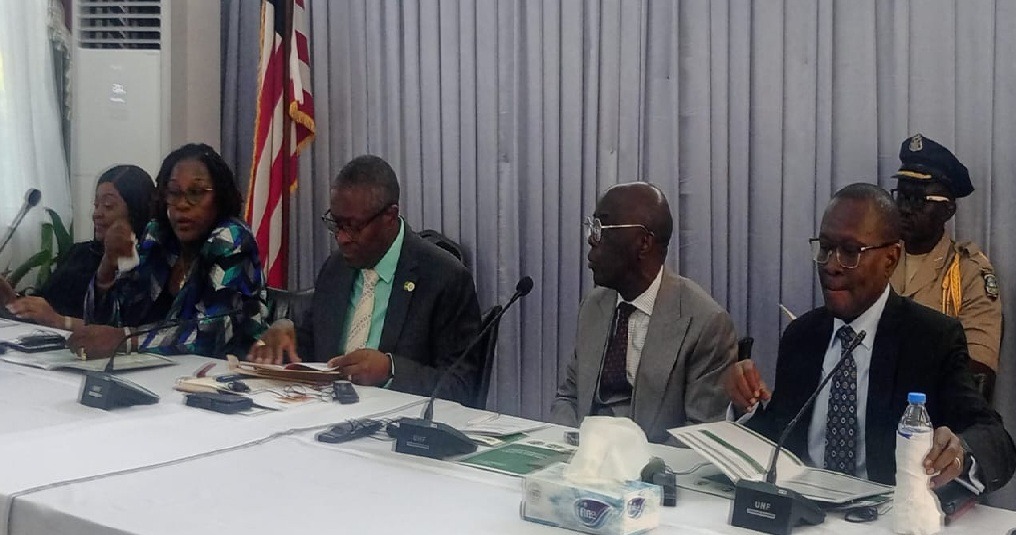
ADNews-Monrovia,Liberia: In a momentous display of regional judicial solidarity, the President of the ECOWAS Community Court of Justice, Justice Ricardo Cláudio Monteiro Gonçalves, delivered a powerful and deeply resonant address at the ECOWAS Court Outreach Dialogue held at the revered Temple of Justice in Monrovia.
By Benjamin Quaye Johnson
The distinguished ceremony convened an impressive array of Liberia’s most influential legal minds and national leaders, including the Deputy President of Liberia, former Presidents, Justices of the Supreme Court, eminent jurists, senior lawyers, directors, and members of the national legal community.
The gathering underscored Liberia’s unwavering commitment to justice, constitutional order, and the broader West African legal architecture.
Addressing the august assembly, President Gonçalves praised Liberia’s judiciary as “guardians of constitutional order and custodians of the rule of law,” emphasizing that the independence and fortitude of national courts form the very bedrock upon which the regional legal order stands.
“A Necessary Dialogue, Not a Courtesy”
In his stirring remarks, the ECOWAS Court President made it clear that this engagement transcended ceremonial diplomacy.
“This dialogue is not merely a courtesy; it is a necessity,” he proclaimed.
“Our institutions are bound by a shared vocation: upholding the rule of law and protecting human dignity across our region.”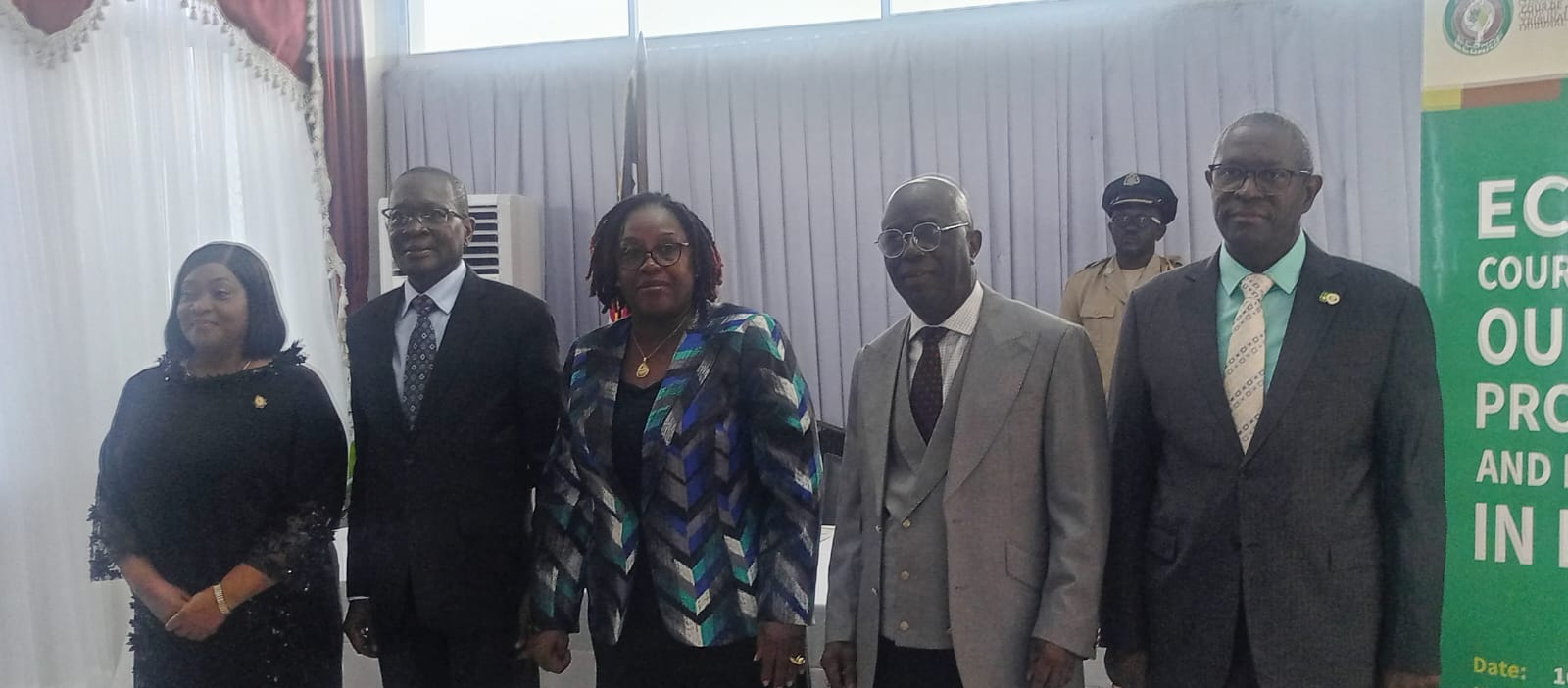
He asserted that the ECOWAS Court and national courts are not competing jurisdictions but rather indispensable partners within a unified legal ecosystem driven by the mandate of Member States and the trust of their citizens.
President Gonçalves highlighted the seamless exchange of legal expertise between national judiciaries and the ECOWAS Court. Many regional judges, he noted, are drawn from national judicial systems and later return home enriched by broader regional perspectives. This dynamic interchange, he said, strengthens a “cohesive and organically unified judicial community,” reaffirming the shared judicial culture that binds the region.
Calling judicial dialogue “the oxygen of the rule of law,” the Court President underscored its essential role in ensuring consistency, coherence, and credibility in legal interpretation across West Africa.
He emphasized that in an increasingly complex landscape of human rights obligations and community law, continuous judicial communication is vital for preventing conflicts of jurisdiction, bolstering accountability, and reinforcing the authority of judicial decisions.
President Gonçalves also paid tribute to national courts, describing them as the “first line of defense in protecting human rights.”
He underscored that when national courts uphold fundamental rights and offer remedies to victims, they not only serve justice but also help shield their respective states from international scrutiny or potential condemnation by the ECOWAS Court.
“In defending human rights domestically, national courts safeguard their states from the consequences of regional judicial scrutiny,” he noted.
This dynamic, he stressed, creates a “virtuous circle of accountability and protection” between national and regional judicial bodies.
The ECOWAS Court President outlined several strategic pathways for deepening collaboration and enhancing judicial efficiency within the subregion:
Enhanced Judicial Dialogues and Conferences Regular engagements to promote comparative jurisprudence and harmonize regional legal standards.
Judicial Training and Capacity Building – Workshops focused on human rights law, case management, and enforcement procedures to elevate judicial competence.
Shared Research Platforms Integrated databases of national and ECOWAS jurisprudence to facilitate seamless legal reference and harmonization.
Streamlined Enforcement Mechanisms – Clear and simplified procedures for transmitting, recognizing, and enforcing ECOWAS Court judgments within Member States.
Institutional Exchange Programs – Short-term judicial placements to foster shared experiences, mutual understanding, and best practices.
These initiatives, he said, will forge a stronger regional judicial community—one that “speaks with a coherent and authoritative voice on matters of justice, rights, and integration.”
President Gonçalves reaffirmed that the ECOWAS Court and national judiciaries are united by a shared destiny anchored in the law and the aspirations of the people.
“By strengthening our dialogue and cooperation, we do not dilute our authority; rather, we elevate it,” he declared.
“Together, we transform the rule of law from a noble aspiration into a living reality across West Africa.”
He urged all stakeholders to continue walking this path of collaboration and mutual respect, committed to justice, human dignity, and the foundational values of the ECOWAS Community.
The ECOWAS Court Outreach Dialogue concluded with renewed vigor, promising an era of deeper regional legal integration and stronger protection of citizens’ rights across the subregion.
Also in a warm and compelling address delivered at the Temple of Justice, Justice Yamie Quiqui Gbeisay formally welcomed the delegation of the ECOWAS Community Court of Justice to Liberia, marking the commencement of a significant outreach engagement aimed at strengthening judicial collaboration within the West African region.
The event, hosted in the heart of Liberia’s legal sphere, brought together judges, magistrates, lawyers, and a broad spectrum of justice-sector stakeholders. It forms part of the ECOWAS Court’s ongoing commitment to deepen regional integration, enhance access to justice, and build stronger cross-border legal partnerships.
Justice Gbeisay praised the ECOWAS Court for its indispensable role in safeguarding human rights, upholding the rule of law, and promoting judicial harmony across the sub-region.
He emphasized that Liberia values the Court’s unwavering dedication to these foundational principles of regional governance.
“Our shared commitment to justice and regional integration makes this occasion both meaningful and necessary,” Justice Gbeisay stated, underscoring the significance of the Court’s interaction with Liberia’s legal community.
Justice Gbeisay described the outreach program as an invaluable platform for expanding legal knowledge and fostering deeper cooperation between Liberia and its regional partners. He noted that the initiative will help strengthen foreign legal collaboration and enhance the collective pursuit of equitable access to justice for all citizens.
He expressed optimism that the ECOWAS delegation’s engagement with members of the Liberian judiciary, including judges, magistrates, and lawyers, would lead to fruitful deliberations and greater synergy in addressing pressing legal challenges that transcend national boundaries.
“I am confident that today’s exchange will trigger deeper collaboration and enhance our collective capacity to address the legal challenges facing West Africa,” he remarked.
Speaking on behalf of the Supreme Court of Liberia and the entire national legal community, Justice Gbeisay extended heartfelt greetings to the visiting delegation, describing the Temple of Justice as the “home and theatre of justice in Liberia.”
He expressed hope that the discussions initiated during the program would generate meaningful outcomes and contribute significantly to the strengthening of judicial institutions across the region.
Justice Gbeisay formally declared the ECOWAS Court Outreach Program conference open, signaling the beginning of a series of engagements designed to bolster regional justice mechanisms and deepen collaboration between Liberia and the ECOWAS Court of Justice.
“With these remarks, I hereby declare this conference open for the transaction of its business,” he affirmed.
The outreach program is expected to enhance Liberia’s integration into regional judicial processes and reaffirm the country’s commitment to upholding the principles of justice, human rights, and the rule of law within the ECOWAS community.
Comments are closed.