
Liberia Reaffirms Commitment to Strengthening Domestic Resource Mobilization for Renewable Energy

4 Mins Read
ADnews-Monrovia, Liberia: The Liberian government has reaffirmed its commitment to strengthening domestic resource mobilization frameworks, particularly within the extractive and energy sectors, to ensure that renewable energy investments benefit vulnerable populations and support inclusive economic growth.
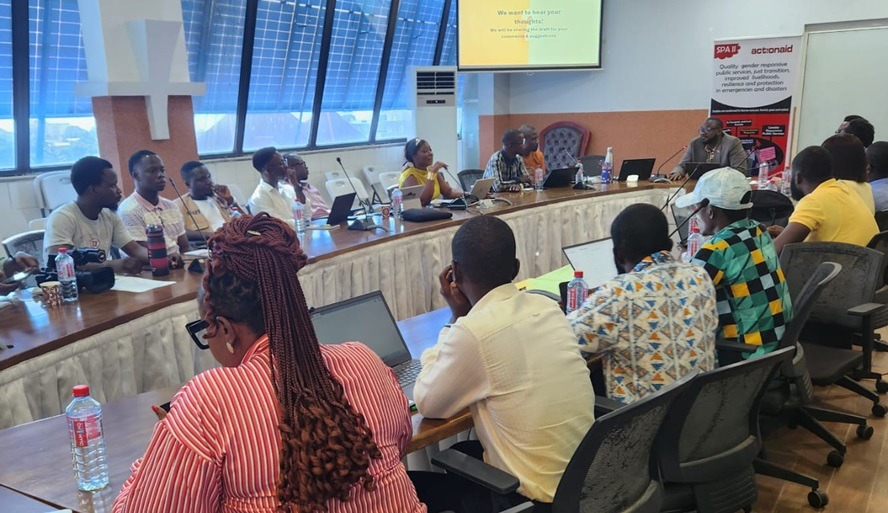
The assurance was given on Tuesday, December 30, 2025 during a Domestic Resource Mobilization (DRM) Dialogue organized by ActionAid Liberia in Monrovia. The forum brought together government officials, civil society actors, youth leaders and development partners to examine financing options for renewable energy and climate resilience.
Speaking at the event, Foday C. Bayoh Jr., national coordinator of the Climate Integration and Financing Office at the Ministry of Finance and Development Planning, said the government is confident that coordinated efforts can transform domestic resources into sustainable financing for renewable energy.
“By working together, we can unlock our domestic resource potential and channel it toward renewable energy development and climate resilience,” Bayoh said.
The dialogue reviewed the current state of renewable energy financing in Liberia, identified gaps in domestic resource mobilization, and discussed policy, fiscal and regulatory reforms needed to boost local investment. Participants also explored inclusive financing mechanisms for women, youth and local communities, drawing on findings from an ActionAid Liberia research report on the extractive sector.
Bayoh emphasized that investment in climate adaptation and mitigation is no longer optional.
“It is essential for sustaining economic growth, protecting vulnerable communities and achieving our green development ambitions,” he said.
He noted that ActionAid’s domestic resource mobilization research highlights untapped potential in the extractive sector and calls for reforms in fiscal incentives, improved governance and the strategic use of public, private and climate finance.
“This dialogue is timely. It provides a platform to examine Liberia’s renewable energy financing landscape, identify practical pathways for mobilizing domestic resources and strengthen collaboration among government, civil society, the private sector and development partners,” Bayoh added.
As Liberia prepares to implement its updated Nationally Determined Contributions (NDC 3.0) and finalize the fiscal year 2026 national budget, Bayoh expressed appreciation to ActionAid Liberia for convening the dialogue.
Professor Benjamin Karmoh, chief technical adviser at the Environmental Protection Agency, said Liberia has committed to reducing greenhouse gas emissions by 64 percent under its latest climate action plan.
“We have been working over the years to address the impacts of climate change at the local, national and international levels,” Karmoh said, describing climate change as a major threat to Liberia’s economy that requires urgent action.
He urged communities to embrace renewable solar energy, noting its potential to deliver broad social and economic benefits.
Patrick F. Wee, coordinator of the Montserrado Chapter of the Federation of Liberian Youth, said the renewable energy sector is closely linked to youth development and employment.
“Reliable and affordable energy is essential for education, small businesses and innovation,” Wee said. “We are proud to be part of this dialogue and urge the government and stakeholders to consistently include young people in national discussions that shape our future.”
Speaking on behalf of ActionAid Liberia, Climate Justice Coordinator Norwu Harris said the DRM dialogue focused on sustainable development, climate justice and inclusive climate action.
She highlighted the disproportionate impact of climate change on vulnerable communities, particularly women and youth who depend heavily on natural resources for their livelihoods.
“Liberia remains one of the most climate-vulnerable countries in the world,” Harris said. “The challenges directly affect women and young people.”
Harris said the dialogue builds on recent policy advocacy around a just energy transition aligned with domestic resource mobilization and energy transformation efforts.
She also cited ActionAid Liberia’s recent extractive sector report, which found that more than $160 million in import tax revenue was lost between 2018 and 2023.
“That loss directly undermines the government’s ability to finance public services, climate adaptation initiatives and inclusive development,” she said.
Comments are closed.