

7 Mins Read
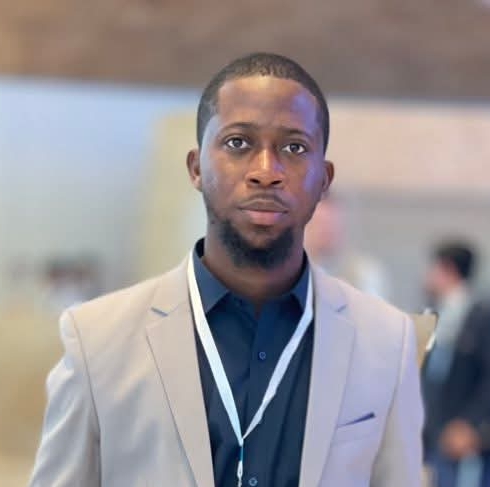
ADNews- Baku, Azerbaijan: Ezekiel Nyanfor, a young Innovative Liberian striving to see a better society where citizens will live in peace and Harmony, has joined his global counterparts in Baku, Azerbaijan, on the founding Conference of the Global South NGOs Platform, calling for an end to double standards in global development and climate action.
The 2025 founding Conference of the Global South NGOs Platform which brought together over 100 nations across the globe, aims to address climate change challenges in the Global South through various initiatives, including strengthening climate finance, building resilient communities, and ensuring that climate actions.
Speaking at the conference, Ezekiel disclosed that out of 85% of the world’s population lives in the Global South, they receive less than 25% of global development financing, less than 2% of humanitarian funding reaches local and national NGOs directly while the South bears the heaviest burdens as far as over 90% of climate-related deaths, and 75% of those living in extreme poverty.
Below is his full Speech
Today, history is being made here in Baku. Today, we stand not as scattered voices, but as one force — over 110 countries, thousands of NGOs, millions of citizens — united in calling for an end to double standards in global development and climate action. No more systems that preach fairness but deliver exclusion. No more investments that enrich a few while impoverishing the many. No more decisions about us, without us. Let us be clear: ● 85% of the world’s population lives in the Global South — yet we receive less than 25% of global development financing. ● Less than 2% of humanitarian funding reaches local and national NGOs directly. ● And still, the South bears the heaviest burdens — over 90% of climate-related deaths, and 75% of those living in extreme poverty. In Africa, the situation is particularly painful. We pledge to protect our forests, hold back on exploiting our natural resources, limit industrialization — all in the name of climate commitments. Yet, we lose billions annually: ● In the Congo Basin alone, countries sacrifice an estimated $13 billion every year to preserve forests for the world. ● In Mozambique and Senegal, massive gas and oil reserves are not exploited while richer countries expand fossil fuel projects unabated. ● Across the Sahel, communities restrict farming and grazing — only to be left vulnerable to food insecurity without what is promised through climate and development finance. This is not the cost of inaction — it is the cost of keeping our word while others break theirs. Meanwhile, developed nations — who pledged $100 billion per year in climate finance before COP29— failed to deliver fully or fairly. Instead of grants, we are offered loans. Instead of solidarity, we are handed conditions. This is not the portrait of the commitments we paint in policy rooms. This is not sustainable development branded on the web pages of the United Nations, This is a sustainable way to keep poor countries poorer and dependent on handouts and burdensome loans. This is not climate justice . This is climate injustice on a global scale. Allow me to be personal a bit. I come from a small community in Liberia — a place where the land and the people are deeply intertwined. I have watched the floods destroy communities and farms — the land that fed generations. I have seen children lose their homes to storms they did not cause. I have seen classrooms empty — because young people are breadwinners instead of learners for tomorrow. For us, poverty, unsustainable development and climate change are not theories discussed in air-conditioned rooms. They are the graveyards where too many dreams are buried. And every time a wealthy nation breaks a promise, another child in Liberia buries their future. That is why I stand here — not pleading for charity — but demanding justice and truth with the urgency it deserves. Yet amid broken promises, the resilience of our people shines through. Who holds the line when disaster strikes and the world looks away? It is local NGOs, community leaders, youth groups, and faith-based organizations. ● In Kenya, the Green Belt Movement restored forests when international aid failed. ● In Senegal, local NGOs protected coastlines against rising seas without waiting for external funding. ● In Mozambique, grassroots responders saved lives in the aftermath of Cyclone Idai long before global assistance arrived. In Liberia, too, it is the women’s cooperatives, the youth-led networks, the market associations — who show that leadership does not require permission. Yet for too long, NGOs from the Global South have been treated as implementers rather than architects. As subcontractors rather than strategic leaders. As grantees rather than game-changers. This must end. We are not the implementers of someone else’s plan — we are the architects of a just future. The Global South is not a problem to be solved. We are a powerhouse of ideas, innovation, resilience, and dignity. We are not asking for a seat at an unequal table. We are building a new table — one grounded in justice, equity, and mutual respect. Through our NGOs and civil society organizations, we catalyze real, transformative change: ● Demanding locally-led solutions, not imported templates. ● Pushing for direct, unrestricted funding, trusting local expertise. ● Redefining success — not by the number of reports written, but by the number of lives transformed. We see this already: ● In Niger, farmer-managed reforestation has regenerated over 5 million hectares of land. ● In Ethiopia, community water systems are reversing desertification more sustainably than billion-dollar projects. ● In Liberia, grassroots conservation is protecting critical biodiversity corridors — not through foreign directives, but through local wisdom. This is real development. This is real resilience. This is the future. However, to lead the future, we must hold ourselves to higher standards: ● Ensuring transparency, accountability, and measurable impact within our organizations. ● Building true interregional solidarity — lifting each other up, not competing for limited resources. ● Equipping ourselves to not merely survive funding cycles, but to drive political and systemic change. And to the global community — hear us clearly: The time for conditional partnerships is over. The time for token consultations is over. Work with us as equals — or risk being left behind by a movement that will no longer wait for validation. Today, we launch the Global South NGO Platform — not as another bureaucratic body, but as a shield, a megaphone, and a bridge. Through this platform, we pledge: ● To share knowledge openly, not hoard it. ● To advocate fiercely, not timidly. ● To defend each other unwaveringly, even when it is inconvenient. Because fairness is not given. Fairness is fought for. Friends, colleagues, champions of change — Let us leave this gathering with more than new connections. Let us leave with a burning commitment: ● To tear down every double standard. ● To uplift every local dream. ● And to ensure that the story of fair and sustainable development is written — not by the distant hands of power — but by those of us who have lived the cost, and who will lead the change. We are not the Global South because we are behind. We are the Global South because we are rising. Thank you.
Comments are closed.