
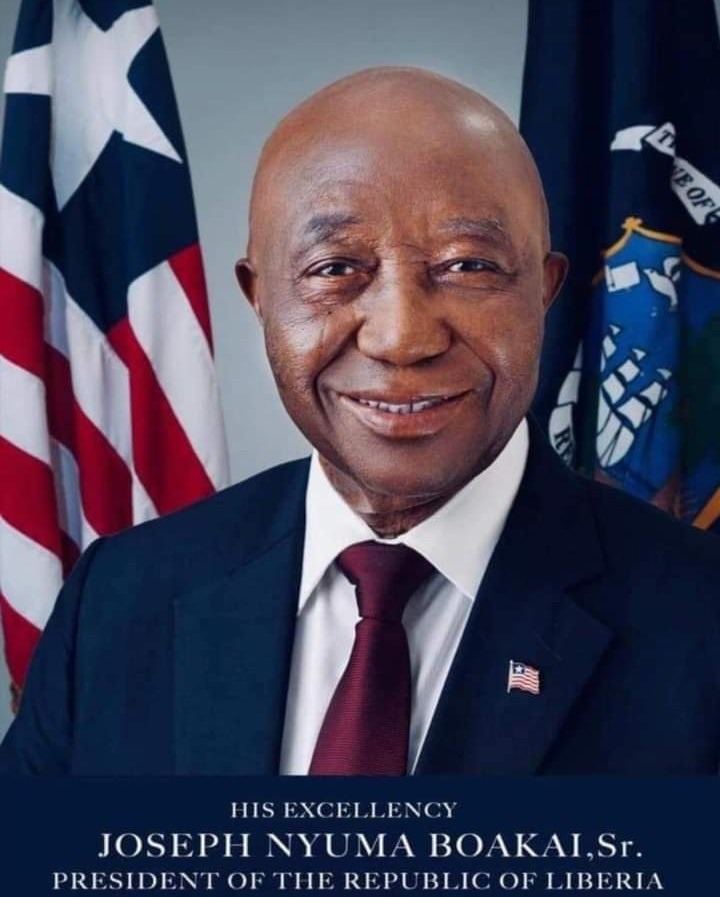
President Boakai Administration Reiterates Support for Ivanhoe Deal
To Boost the Investment Sector

3 Mins Read
ADNews-Monrovia, Liberia: Senior Liberian government officials on Tuesday, December 3, 2025, appeared before a House Specialized Committee to clarify the scope and legal implications of the 2021 Implementation Agreement (IA) governing cross-border rail and port access between Liberia and Guinea.
By Princess Norah Tokpah
Deputy Minister of Justice for Economic Affairs Charles Karmoh and Deputy Foreign Affairs Minister for Administration Gabriel H. Salee, as well as a representative of the National Investment Commission provided testimony. The hearing was chaired by Rep. Foday E. Fahnbulleh.
Lawmakers sought clarity on the IA, signed in 2019 and ratified in May 2021, which establishes the framework for Guinea-based mining companies to transport minerals through Liberia’s rail and port infrastructure, a major element of bilateral economic cooperation.
The agreement forms the basis for Ivanhoe Liberia’s Concession and Access Agreement (CAA), currently before the Legislature. Led by Deputy Minister Karmoh, the officials assured the Joint Committee on Investment and Concessions, Judiciary, and Transport that Liberia remains fully compliant with the IA, and that if Ivanhoe Atlantic’s CAA is approved, it will align with the treaty’s terms.
What the Implementation Agreement Does
The IA is a treaty regulating how mining operators in Guinea,many of whom are landlocked, can access Liberia’s railways and ports, particularly the Yekepa–Buchanan Railway that runs through Nimba and Bong counties and terminates at Buchanan Port. The agreement outlines procedures for access, establishes responsibilities of both governments, and seeks to enhance cross-border trade and economic development.
Key Provisions of the Agreement
Equal Access to Infrastructure
The IA stipulates that Guinean mining operators must receive the same access to Liberia’s transport infrastructure as Liberian operators, without discrimination based on nationality or product origin. While cooperation is encouraged, the treaty does not require either country to seek the other’s approval before making policy decisions, preserving full national sovereignty.
Clear Eligibility and Access Procedures
Mining companies seeking to use Liberia’s infrastructure must submit requests to the Government of Liberia. These are reviewed independently by each government, not jointly, to determine eligibility. Liberia retains the sole authority to approve use of its rail and port systems, while Guinea determines whether a mining operator meets its internal criteria.
Defined Role of Oversight Committees
Inter-Ministerial and Monitoring Committees (IMMCs) established under the IA monitor implementation, mediate disputes, and manage technical issues such as customs and border procedures. They do not have the power to approve, review, or overturn decisions made by either government.
About Ivanhoe Atlantic’s CAA
Ivanhoe Atlantic’s Concession and Access Agreement builds on the IA and outlines terms under which mining companies, particularly Société des Mines de Fer de Guinée (SMFG), a joint venture between Ivanhoe Atlantic and the Government of Guinea, may use Liberia’s infrastructure. The CAA does not create new rights but operationalizes those in the IA, granting SMFG access to the Yekepa–Buchanan Railway for mineral exports, subject to Liberian law.
A Framework for Regional Growth
The IA is regarded as a significant milestone in Liberia-Guinea cooperation. It promotes economic integration, job creation, reduced trade barriers, and improved transport networks in line with the African Mining Vision and regional principles adopted by ECOWAS and the Mano River Union.
If fully honored, the IA and Ivanhoe Atlantic’s CAA are expected to stimulate investment, strengthen bilateral ties, and create opportunities for additional industries to use the strategic rail and port corridor. Officials noted that the CAA represents an enabling framework that could shape long-term economic development and regional trade for both nations.
Comments are closed.