

Government of Liberia Empowers 40 through SASA! Together Approach Training – To eradicate GBV and harmful social norms

7 Mins Read
ADNews-Monrovia: The Ministry of Gender, Children and Social Protection, through its Liberia Women Empowerment Project (LWEP), a US$46.6 million project funded by the World Bank, successfully trained 40 individuals from various backgrounds in the SASA! (Start, Awareness, Support, Action) methodology. This effective community mobilization approach aims to reduce gender-based violence (GBV) and promote gender equality. The workshop was held from April 7-11 at the Corina Hotel in Monrovia. Participants included six County Coordinators from the Ministry of Gender, representing six project counties, as well as members from seven partner organizations: Plan International Liberia (the project lead service provider), ActionAid Liberia, Catholic Relief Services (CRS), Kids Education Engagement Project (KEEP), Defence for Children International (DCI), Foundation for Community Initiatives (FCI), and Medica Liberia.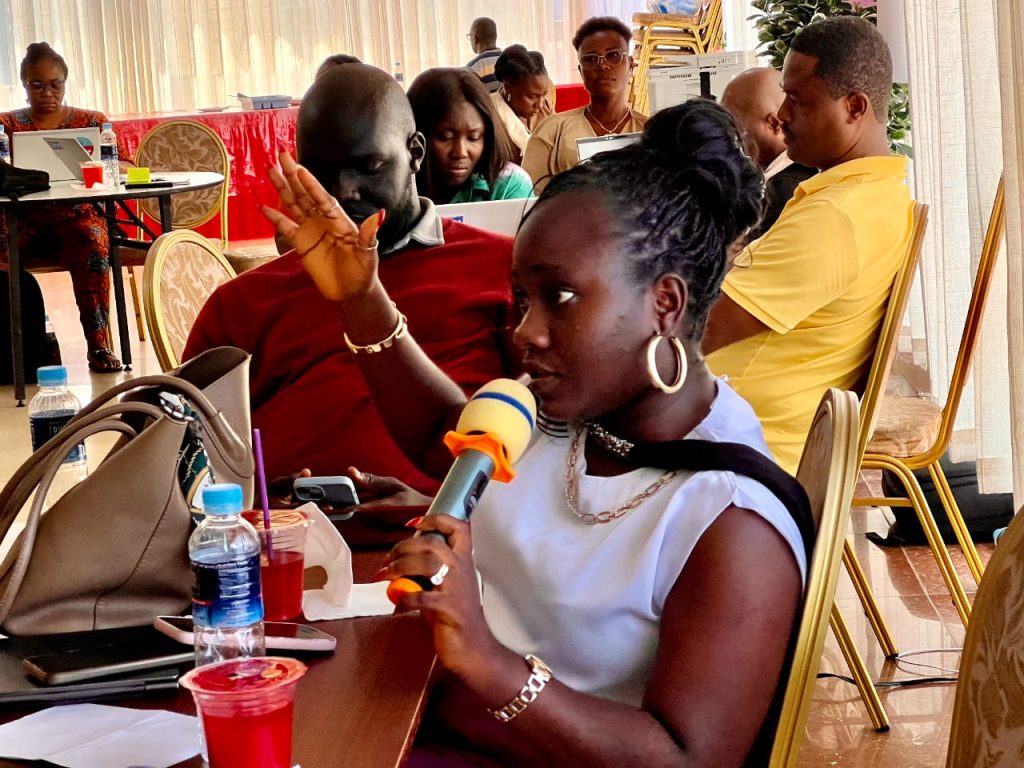
The SASA! approach, facilitated by Raising Voices from Uganda, is rooted in feminist principles and uses community-led activism, media campaigns, training sessions, Strategic Behaviour Change Communication, and advocacy to prevent violence against women and girls. The word SASA! means “Now” in Swahili, emphasizing urgency, and also serves as an acronym for its four phases: Start, Awareness, Support, and Action. Through these phases, SASA! will empower LWEP communities to understand and address the power dynamics that contribute to GBV. The training equipped participants with the tools to educate others about gender equality, nurturing empathy and solidarity while encouraging collective actions that drive sustainable change.
The anticipated outcomes include a significant reduction in GBV and intimate partner violence, improved support systems for women and girls, and a cultural shift towards recognizing and valuing gender equality. As participants return to their communities, they will initiate local initiatives aimed at creating safe spaces for dialogue and mobilizing grassroots activism.
Madam Yvette Alal, Technical Advisor for LWEP from Raising Voices, emphasized the importance of the “Start” phase. 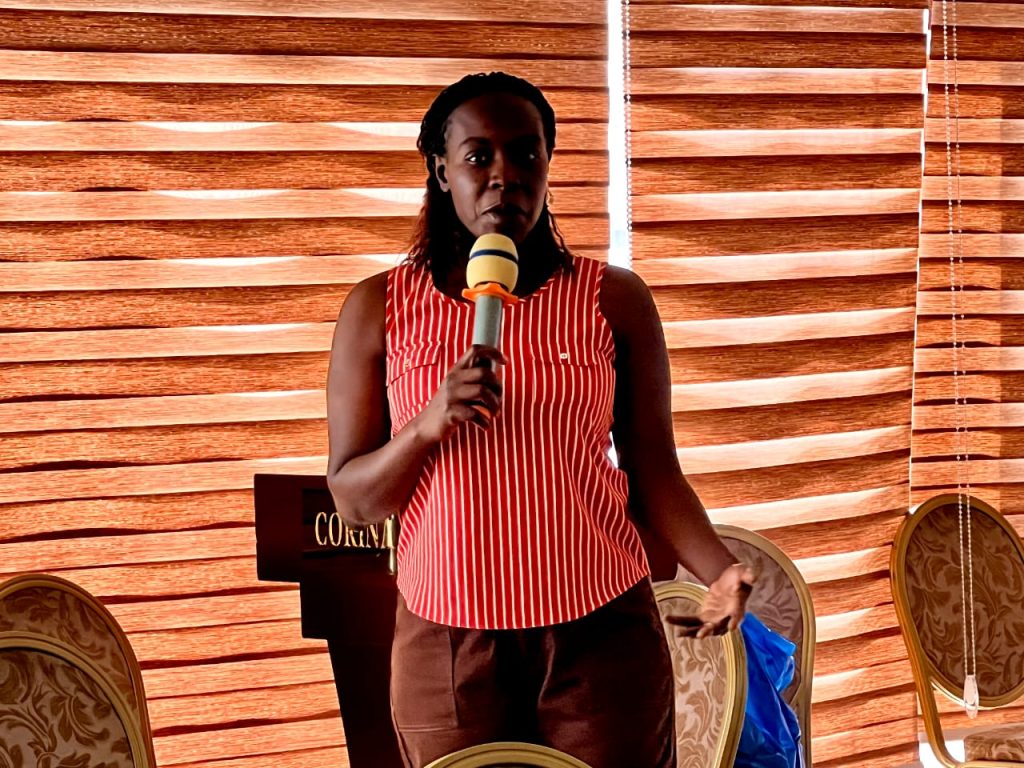
“We began by introducing simple yet powerful ideas that help communities rethink power dynamics and promote gender equity,” she noted. “While change takes time, creating safe spaces for dialogue is a vital first step.”
Madam Chinelo Amaechina, Interim Lead Gender Specialist and Senior Gender Equality & Inclusion Manager for LWEP at Plan International Liberia, explained the focus of the five-day training: “We equipped participants with the tools and guidance to identify community-based activists and address negative social norms affecting women and girls, particularly through the SASA! setup phase.”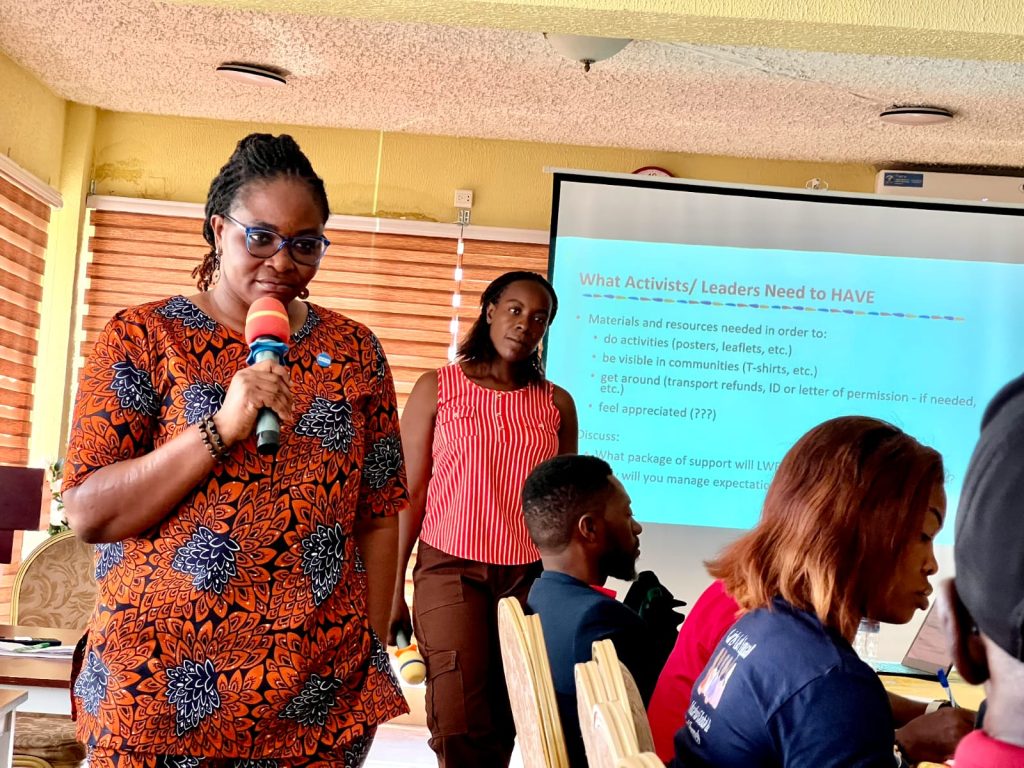
Participants expressed enthusiasm about the initiative and its potential impact.
“The SASA! approach allows community members to lead the change they want to see,” said Jeff George Monolith, Project Manager at Defence for Children International (DCI)-Liberia. “If I live in a community where this is implemented, I will talk to my brothers, shopkeepers, and neighbors, organize town hall meetings to challenge harmful traditional beliefs.”
Veronica R. Marshall, Program Manager at Medica Liberia, emphasized her organization’s role in implementing SASA! in Montserrado, Gbarpolu, River Cess, and Grand Gedeh counties.
“We will be working on Component 1A, which focuses on addressing violence in intimate relationships and promoting balanced power dynamics. Helping communities recognize the power within themselves is key to driving meaningful change,” she said.
Pauline T. Zourpeawon, a SASA Gender Officer – LWEP, expressed her thoughts about reducing violence in the communities where the LWEP project operates.
“This is a new and exciting approach for us in Liberia,” shared Pauline. “I feel ready to help the government of Liberia tackle GBV, especially among vulnerable populations such as women and girls.”
Franciana Pearl Jackson and Mercy Gwagee, SASA! Gender Officers expressed their enthusiasm and commitment to implementing the SASA approach in the fight against GBV, particularly intimate partner violence. They emphasized that the SASA! The Together approach is an innovative strategy designed to challenge harmful societal norms and empower communities to make healthy, sustainable choices.
“This is a great time and opportunity to change the perception of our communities regarding the benefits of peace. I am certain that there will be a drastic reduction of GBV as a result of the SASA! Together training. I am ready to work with the Community Activists in the communities of Bomi,” noted Isaiah Teah, the Bomi County Gender Officer – LWEP. 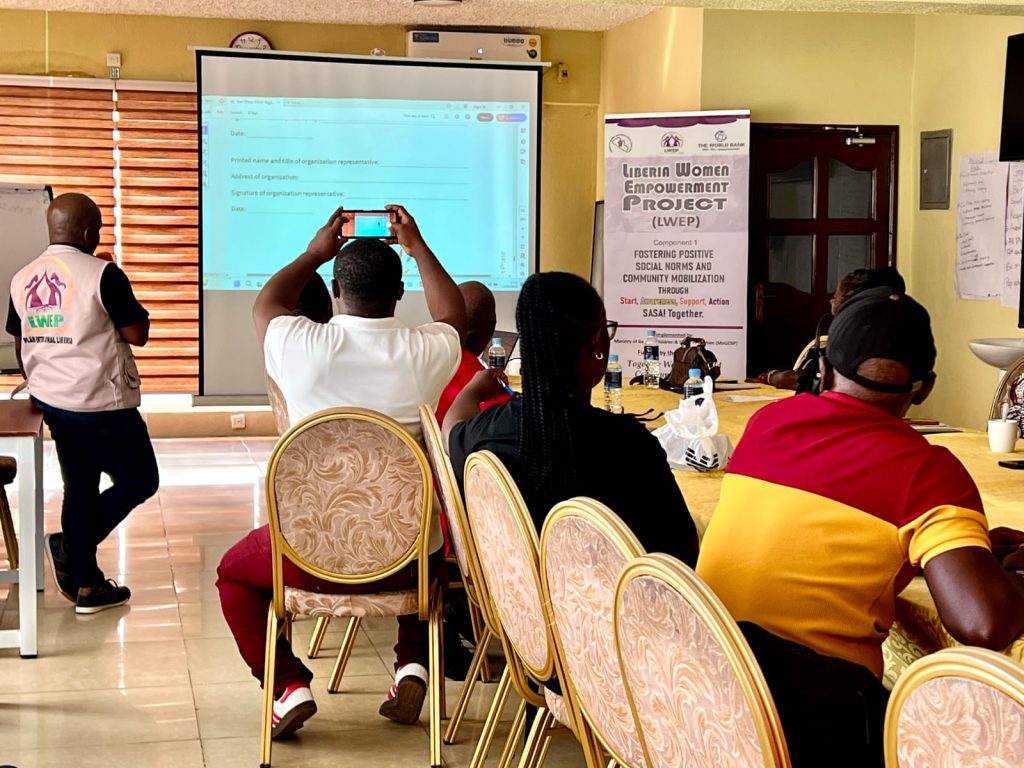
Khanfee B. Fofana, the Gbarpolu Gender County Coordinator, expressed her gratitude to the Ministry of Gender for the project. She emphasized the urgent need for the application of the SASA! approach and voiced her hope that this methodology will foster peaceful communities in Liberia, where women and girls can succeed.
“This cannot be overstated: I have high hopes that gender-based violence will be reduced. While it takes time, the SASA! the approach will surely accelerate sustainable community decisions. I am confident that this new approach will foster peace in our communities and fundamentally change how we perceive and address these issues.”
In a special statement, Uzma Qureshi, Senior Social Development Specialist at the World Bank and LWEP Co-Task Team Leader, expressed strong support:
“I’m delighted to see such committed participants working on domestic violence and gender norms. This is our first collaboration with the Liberian government to transform social norms, and we are excited about the potential for real, lasting change.”
She emphasized that while the World Bank funds the project, LWEP remains a Liberian government-led initiative, and praised Plan International Liberia for coordinating what she described as a “comprehensive and impactful training” that brought together grassroots activists and government officials.
Looking ahead, over the next three years, the SASA! approach is expected to transform harmful social norms across 498 project communities, with 267,200 people directly benefiting from the intervention. With strong community ownership and a ripple effect in place, the initiative has the potential to positively influence more than 500,000 lives in Liberia by 2027. The project aims to reach 36,000 households and influence more people through interventions designed to strengthen social and livelihood services for vulnerable and at-risk women and girls (70%), men and boys (30%), including those with disabilities, promote positive gender norms, and empower communities to address systemic challenges, including early child marriage, GBV, and violations of women’s rights.
LWEP, through the SASA! Together, will foster positive gender norms and empower communities to confront systemic harmful traditional practices, including early child marriage, GBV, intimate partner violence, and violations of women’s rights. Funded by the World Bank through the International Development Agency (IDA), LWEP is a three-year, US$46.6 million multi-sectoral project aimed at addressing key barriers to gender equality. Implemented by the Ministry of Gender, Children and Social Protection through Plan International Liberia (the lead service provider together with six partner organizations), including CRS, AAL, Medica Liberia, DCI-Liberia, FCI, and KEEP, and two professional service providers (Viamo and Raising Voices), LWEP operates in six counties: Bomi, Gbarpolu, Grand Gedeh, Grand Cape Mount, Montserrado, and Rivercess.
Comments are closed.