

11 Mins Read
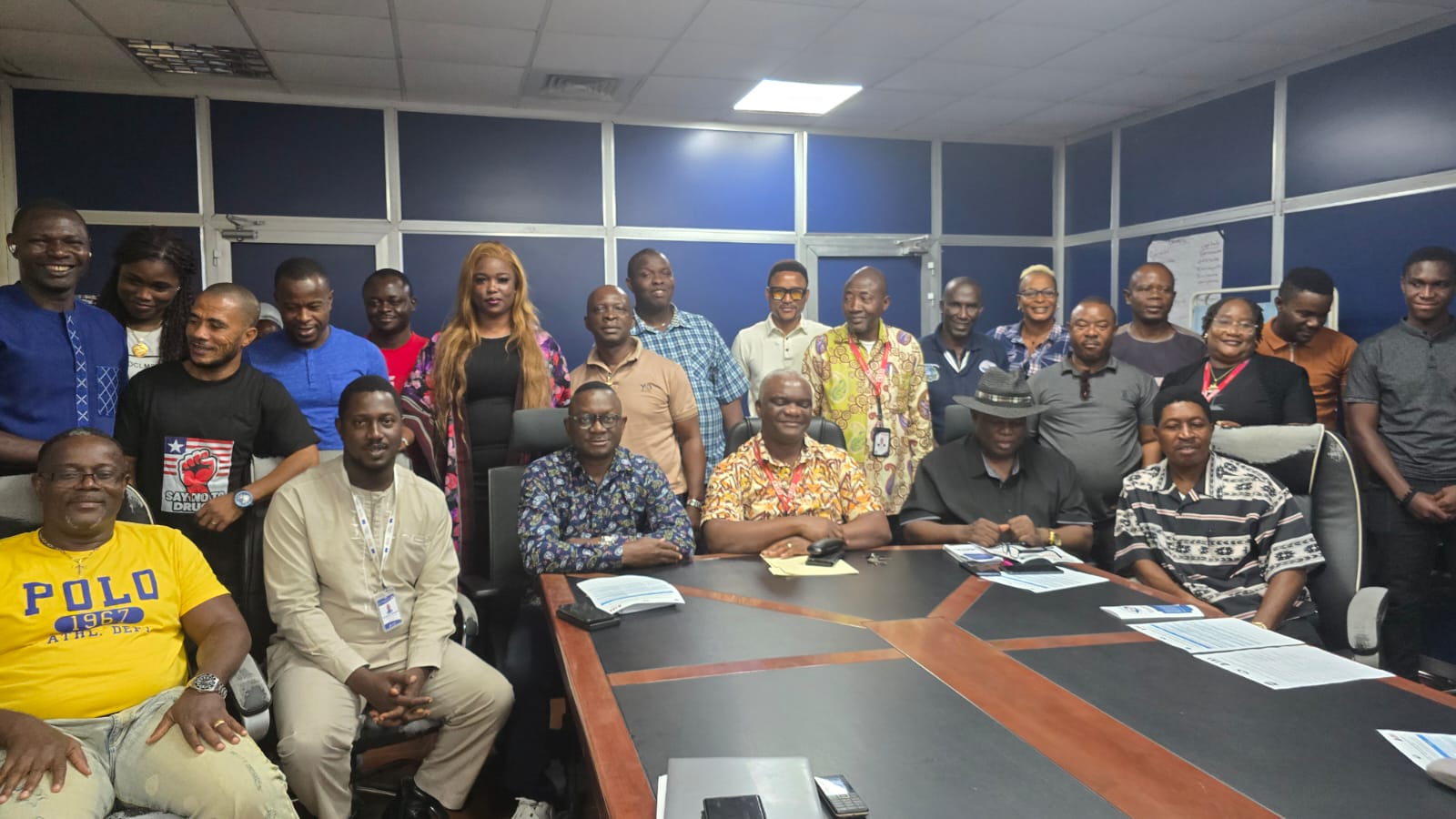
ADNews-Monrovia, Liberia: The Independent Information Commission (IIC) on Friday, November 28, 2025, held a Day-long intensive Freedom of Information Awareness, Compliance and Record Management Training for Senior Management officials and employees of the Liberia Revenue Authority (LRA) at its head office in Paynesville City.
By H Matthew Turry
The training aimed at raising awareness on the public rights to access information, the statutory exemptions within the FOI Act, the appeal procedures before the Information Commissioner, LRA compliance obligations under the FOI Act and as well as promoting the best practices in record management to guarantee public access to information.
Speaking at the opening of the training session, LRA Commissioner General, James Dorbor Jallah expressed appreciation to the Independent Information Commission for the partnership in advancing transparency, accountability, and good governance across public institutions.
The LRA boss pointed out that the FOI Act of 2010 reinforces Article 15c of the 1986 Constitution of Liberia by granting citizens the right to access information and requiring public institutions to proactively disclose and properly manage the information under their care.
The LRA boss Jallah told the IIC and participants that the LRA remained strongly committed to implementing the FOI Law within the full extent of the law and also, has taken deliberate steps to make information readily available to the public as part of its transparency culture.
The LRA Commissioner General Dorbor Jallah informed the gathering practitioners that the LRA runs several public bulletin boards, television screens, and has established a regularly updated and widely accessible, user-friendly website.
Stating, “The platforms possesses high quality, informative content enriched with basic institutional details like annual reports, audit reports, organogram, leadership structure and real-time revenue dashboard screening the amount of revenue collected daily and at the exact moment, enabling the public to monitor revenue collections and sources.
The Liberia Revenue Authority boss noted that this level of openness demonstrates their belief that public information rightfully belongs to the public.
He elaborated on the LRA media- partnership which has seen an investment of over 35,000 USD in capacity building initiatives and support, benefiting over 100 journalists across five(5) counties including Bomi, Gbarpolu, Cape Moun, Montserrado and Margibi counties in understanding tax issues.
While recognizing the importance of access to information and highlighting LRA tremendous efforts in ensuring that the public is informed on its programs and activities daily, Commissioner Dorbor Jallah noted that Revenue Code strictly prohibit them from disclosing certain taxpayer information to third parties and violating these provisions carries grave consequences.
He explained that FOI requests that fall within these protected areas cannot be easily granted; not out of unwillingness, but because the law requires a court order before such information can be released.
He encouraged all requesters to comply with this legal framework and to take advantage of the many areas where disclosure is authorized.
“It is not about what we want; it is about what the law says, and we must all abide by the law” he noted.
The Liberia Revenue Authority boss emphasized that Transparency builds trust, and trust strengthens voluntary compliance.
“When taxpayers trust the system, they are more willing to meet their obligations, leading to improved revenue performance and better public services that is why today’s training is so important,” he said.
The LRA boss concluded by saying, “It will deepen our understanding of the FOI Act, strengthen our compliance performance, and reinforce our collective commitment to accountability.
In his remarks, Danicius Kaihenneh Sengbeh, LRA Communication, Media & Public Affairs Director welcomed the participants and stated that the IIC presence signifies a shared commitment to strengthening transparency, accountability, and public trust, a value at the heart of the Freedom of Information Act which is essential to LRA administration.
Sengbeh told the participants that the gathering was not just another workshop, but part of a long journey which began in March 2016, following a request from the former Information Commissioner, Cllr. Mark Bedor-Wla Freeman requesting the LRA then Commissioner General, Madam Elfrieda Stewart-Tamba to appoint an Information Officer consistent with Chapter 3 section 3.6 of the FOI Act.
According to Sengbeh, the request set the stage for what would later become a defining chapter in LRA culture.
He noted that the FOI Act is not merely a legal requirement, but a governance tool that strengthens public confidence, improves service delivery, ensures openness, responsiveness, and leadership accountability.
He noted that public institution like the LRA are obligated to provide information to the public and as well, decline public access if said information falls within one and more exemption under the FOI Act.
He further stated that LRA imposes no tax-clearance requirement, no conditions, and no barriers for citizens seeking information.
He appreciate the IIC for the Partnership and wiliness to share knowledge to ensure that the LRA remained compliant, and encouraged participants to contribute fully to discussions by asking important question and sharing experiences in seeking clarification.
Also speaking, the IIC Acting Compliance Director Armah Boimah Johnson on behalf of the Independent Information Commission thanked the LRA for its proactive steps in enhancing public access to information, particularly prioritizing FOI Compliance in the publishing of key institutional documents and records subject to proactive disclosure as mandated in Chapter 2 section 2.6 of the FOI Act.
The IIC compliance head praised LRA for taking innovative steps in providing real- time public access national revenue collection.
He emphasized that the FOI Law, particularly Chapter 1 section 1.7 recognizes the Freedom of Information Act as the primary law governing the right of access to information, including all matters related to request for and provision of information in Liberia and no administrative action, order or regulation contrary to, inconsistent with, or in derogation of this Act shall issue or be effective in Liberia.
Mr. Johnson informed participants that where the FOI Law and other statues clashed, the FOI Law will prevail, except where it clashes with the Constitution of Liberia, and the Information Commissioner has mandate to review existing laws and regulations relating to access to information and make recommendations for reform and harmonization of the laws.
He also pointed out that information which constitute an unreasonable disclosure of personal information is exempted from the FOI Law.
He explained that current Personal Data Protection & Privacy Bill when passed will required Data subject consent before disclosures and will repeal and amend other inconsistent statues.
Mr. Johnson called on LRA, including all MACs to publish their approved budget and its procurement contracts on goods and services, two critical indicators in the Commission’s compliance assessment and FOI scorecard.
The IIC compliance Head said contract documents relating to the use of public resources in procuring goods and services are documents and records are subject to proactive disclosure.
He added by saying, “Except where the disclosure will likely cause injury or substantial harm to the security and defence of the Republic of Liberia, or will destroy the commercial value or affect the competitiveness of a public authority or private entity in relation to the business or work or persons protected in one or more exemption of the FOI Act.
IIC compliance Director called on all MACs to appoint, maintain and duly support at least one designated personnel/staff as Public Information Officer, whose overall responsibility shall be to receive requests for information held by the authority or entity and coordinate the response(s) of the authority or entity to all such requests,
“Establish an Internal Information Request Review Body, maintain, and regularly update a widely accessible and user-friendly publication scheme whereby the public authority or public body automatically provides detailed information regarding its core functions, nature of its activities and operations, and the information it possesses, automatically publish their enabling legislations,” he added.
He further by saying, “All public institutions should publish existing policies, procedures, rules, approved budgets, financial accounts, material contracts, organizational charts, including lines of reporting, procedures for appealing decisions and any other information that would enable the public to deal with the authority and monitor its performance.
Mr Johnson noted that the FOI activities reporting template has been developed and will be issued soon following the appointments of Public Information Officers.
He thanked the LRA for the partnership, support and turnout as well, pledged the Commission’s openness and readiness to build synergies in promoting and advancing the FOI regime in Liberia.
He concluded by praising the leadership and guidance of the Hodge-Page administration for their unrelenting support and strategic leadership oversight in the implementation of the Commission’s mandate and its commitments under the ARREST Agenda for Inclusive Development and the performance Management and compliance system (PMCS) of the Cabinet Secretariat of the Ministry State for Presidential Affairs.
In his remarks at the training, IIC Record Supervisor, Mr. Bernard M. Clarke underscored the importance of an effective record management to guarantee public access to information.
Mr. Clarke called on LRA and all MACs to develop and implement a comprehensive record management policy and procedures that address all aspects of record creation, storage, access, and disposal.
He called for the establishment of a record unit in all MACs to oversee the management of their documents and records in straight adherence with policies procedures and guidelines.
“Create secure locations, both physical and electronic, that protect them from unauthorized access, damage and loss, implement access controls to limit access to records to authorized personnel only, use encryption for digital records to protect sensitive information,” he urged
The IIC Record Supervisor, Bernard M. Clarke further urged public institutions by saying, “Ensure records are stored in a way that allows for timely and accurate retrieval, establish a retention schedule that outlines how long records should be kept based on policies and law, dispose of records securely,
The IIC Record Supervisor frown of bad record management including disorganized filing and reliance of outdated systems for storage and backed up.
He concluded by calling on all MACs to transition to electronic filing systems to enhance quick access and preserved documents and records from damage or loss.
The day-long training session brought together participants including LRA Commissioner General, James Borbor Jallah, Samuel G. Bennet, Deputy Commissioner General for Administration, Assistant Commissioners, Managers and supervisors of divisions and sections within LRA.
Comments are closed.