


4 Mins Read
ADNews-Monrovia, Liberia: ActionAid Liberia (AAL) urges stakeholders to improve menstrual health rights, challenge period stigma, and promote policy changes to address the challenges women and girls face during their menstrual period.
Speaking at the World Menstrual Hygiene Day on Wednesday, May 28, 2025, in Monrovia, Victoria Torlo Koiquah, AAL Business Development Manager, emphasized that menstrual health is not merely a health issue but a matter of gender justice, education, and economic development.
“This celebration is not just about progress, it’s about amplifying the voices of girls and women who are too often silenced by stigma, poverty, and systemic neglect,” Koiquah said.
She reaffirmed ActionAid’s commitment to working with communities, women’s groups, and civil society networks to tackle the structural causes of poverty and injustice.
“In Liberia, the challenge is urgent and real. Research shows that over 60% of schoolgirls in rural areas lack access to basic menstrual hygiene materials, often missing school during their periods,” Koiquah noted. “UNICEF data reveals that 1 in 10 African girls miss school due to menstruation, with some dropping out entirely. In Liberia, this is worsened by the lack of clean and safe sanitary facilities, especially in public schools and marketplaces.”
Koiquah called for the removal or significant reduction of tariffs on menstrual products, which she said are unaffordable for many low-income households. “Access to menstrual products is a basic human right,” she added.
Madam Gloria Yancy, Gender-Based Violence and Harmful Practices Program Specialist at UNFPA-Liberia, highlighted that poor menstrual hygiene management undermines women’s and girls’ rights and worsens social and economic inequalities.
“Gender inequality, extreme poverty, and harmful traditions amplify deprivation and stigma,” said Yancy. “We know what is needed: safe and reliable supplies, privacy to change, access to water and sanitation, and education to make informed choices.”
She urged global and national health policies to prioritize menstrual health and invest in comprehensive approaches that combine education, infrastructure, and stigma-reduction initiatives. “Schools, workplaces, and public institutions must ensure menstrual hygiene is managed with dignity,” she added.
Deputy Minister for Gender at the Ministry of Gender, Children and Social Protection, Madam Laura Golekai, reassured participants of the government’s commitment to creating a supportive environment for all women and girls.
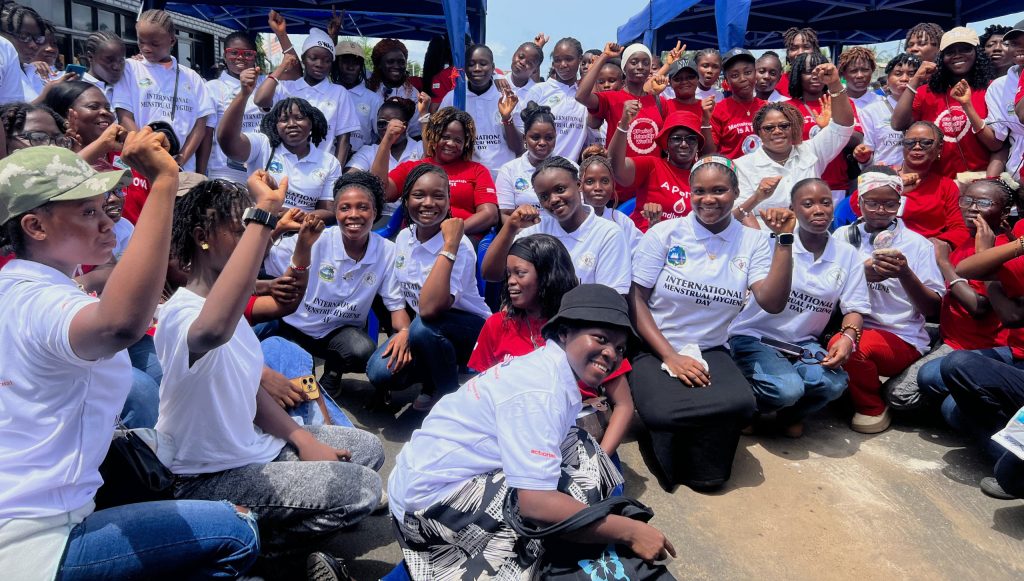 “Today, we speak openly about menstruation to challenge stereotypes. This is not just a women’s issue—it is a human rights issue,” Golekai emphasized.
Youth Voices Demand Change
Felecia B. Kamara of the Young Feminist Movement expressed concerns about the lack of sanitary pads in schools, hotels, and public restrooms. “Girls who unexpectedly menstruate outside their homes face significant challenges,” she said. Kamara called on all Liberians to support efforts to empower and prioritize menstrual health across the country.
“Menstruation is not a taboo, let’s stop the stigmatization. A period-friendly Liberia is all I hope for. She bleeds, she lives, and she strives,” Kamara concluded.
Grace E. Yeboah, Gender Coordinator for the West Point Adolescent Initiative, praised ActionAid and partners for their role in educating adolescent girls on menstrual hygiene.
“Many parents don’t talk to their daughters about menstruation. Learning how to use, dispose of, and manage pads properly is a major step forward,” Yeboah said.
As a resident of West Point, one of Monrovia’s most vulnerable communities, Yeboah emphasized the importance of taking the knowledge gained back to educate others. “We will share this information with our peers to empower them and raise awareness about menstrual health risks and hygiene practices.”
World Menstrual Hygiene Day, observed annually on May 28, aims to break taboos and raise awareness about the importance of good menstrual hygiene management (MHM). In Liberia, the movement continues to grow as civil society, government, and international partners unite to create a period-friendly society where no girl is left behind.
Comments are closed.